

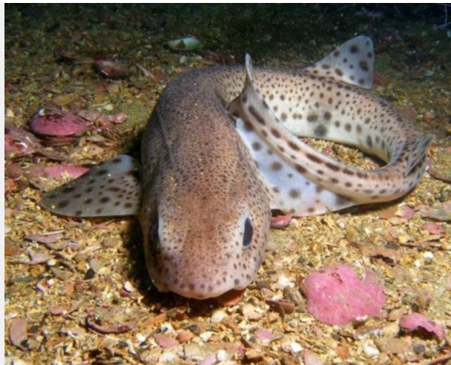
Did you know there are 550 known shark species worldwide? Not all are as large as the great white shark (Carcharodon carcharias) measuring an average of 4.6 meters or 15 feet.
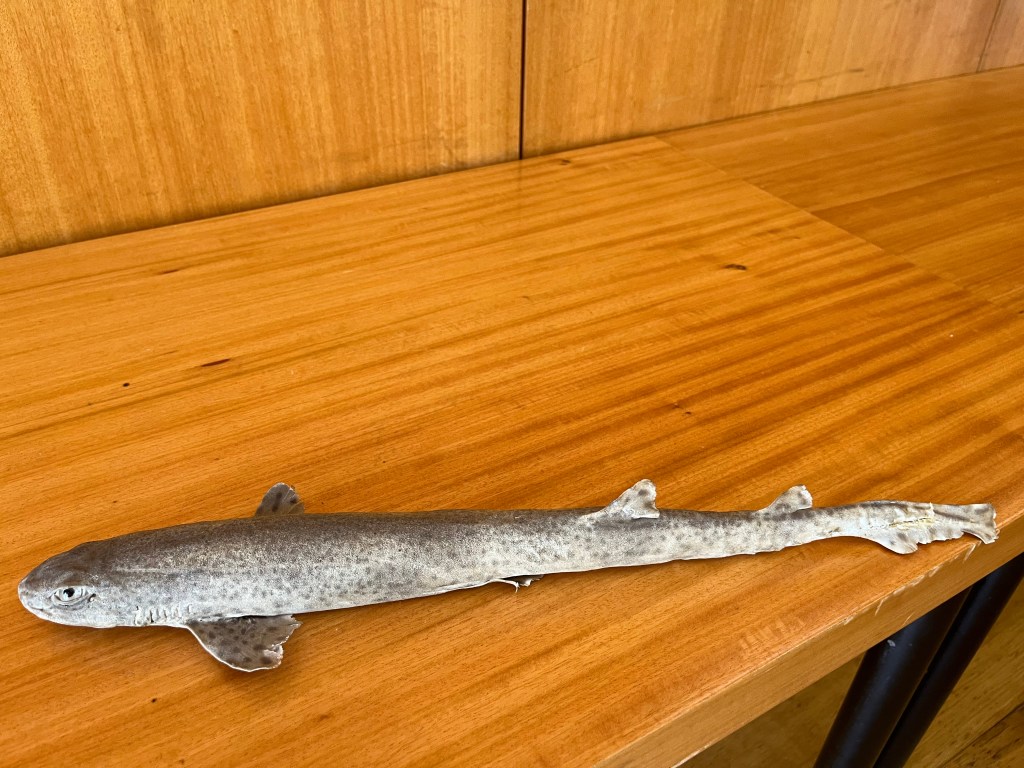
The Lesser spotted dogfish (Scyliorhinus canicular) is a relatively small, beautiful, and elegant coastal shark. It lives along the eastern Atlantic coast, from Norway and Portugal to Senegal, West Africa, the Mediterranean coastline, and the northeast coast of Brazil. It can grow up to one meter (3 ft. 3 inches), and its thick, coarse skin has small dark brown spots and a light grey underside, giving it a distinctive camouflaged appearance. This small shark feeds on marine invertebrates, including mollusks, crustaceans, and cephalopods. It is also known as the Small-spotted catshark, Sandy dogfish, Roughhound, or Morgay.
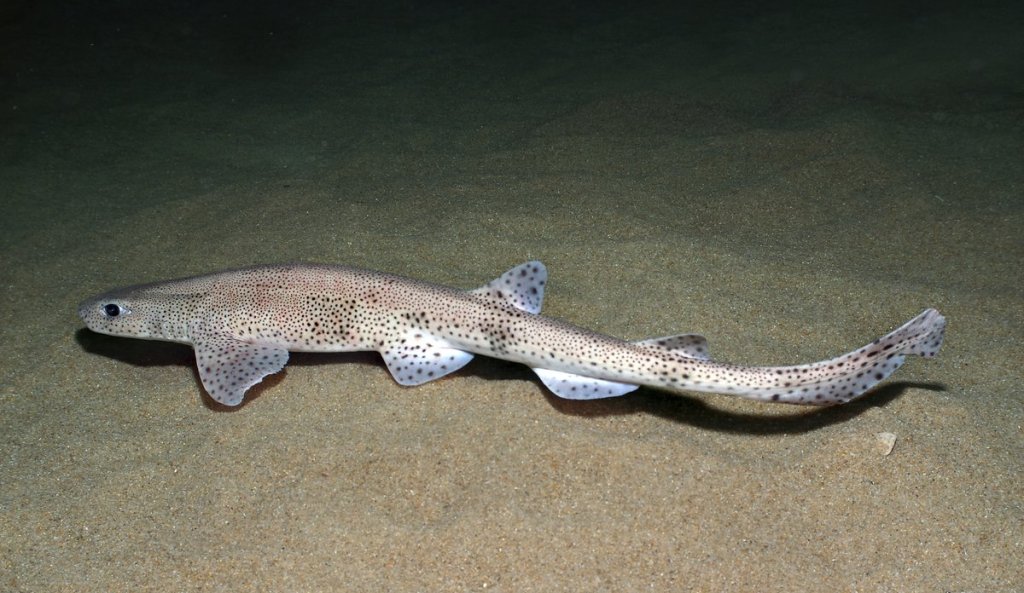
Photo: Erling Svensen / Institute of Marine Research
In Portuguese, this species is known as pata roxa, gata or caneja.
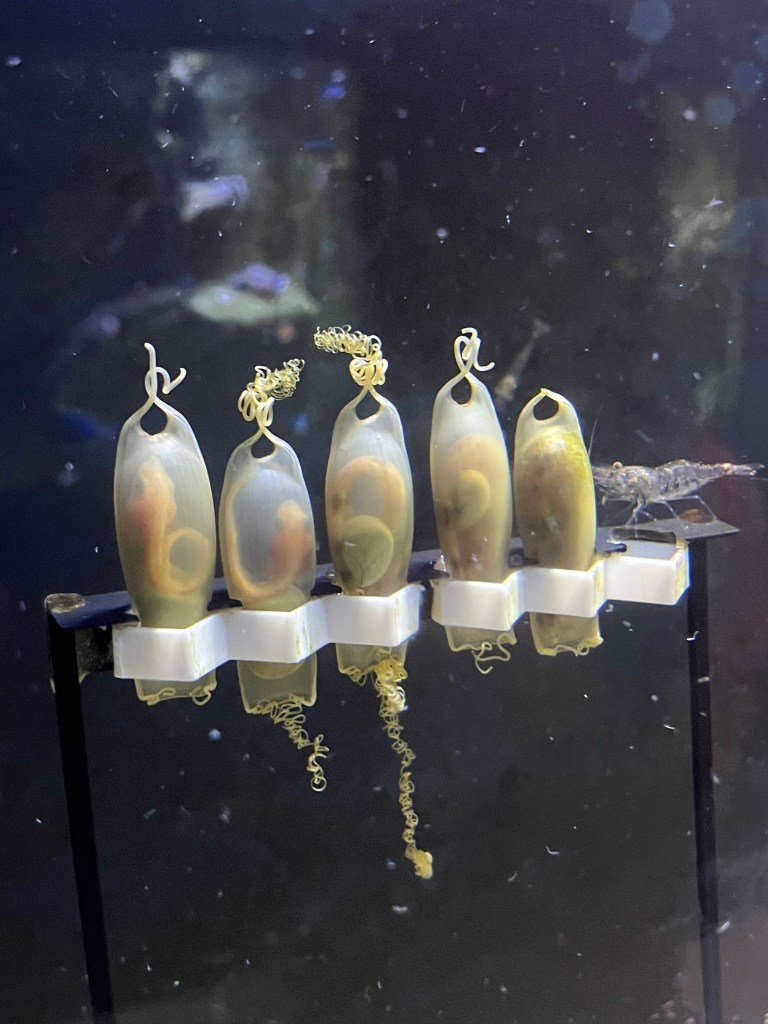
Lesser spotted dogfish is a groundfish, or demersal fish, found at depths from a few meters to about 400 meters (1,310 ft.). It spends its time in groups on sandy seafloors. As an oviparous species, females lay horny capsules whose long tendrils attach to macroalgae in shallow waters. These capsules, also known as “mermaid pouches,” have an elongated, rectangular shape. Empty egg capsules can often be found along coastal beaches such as Peniche.
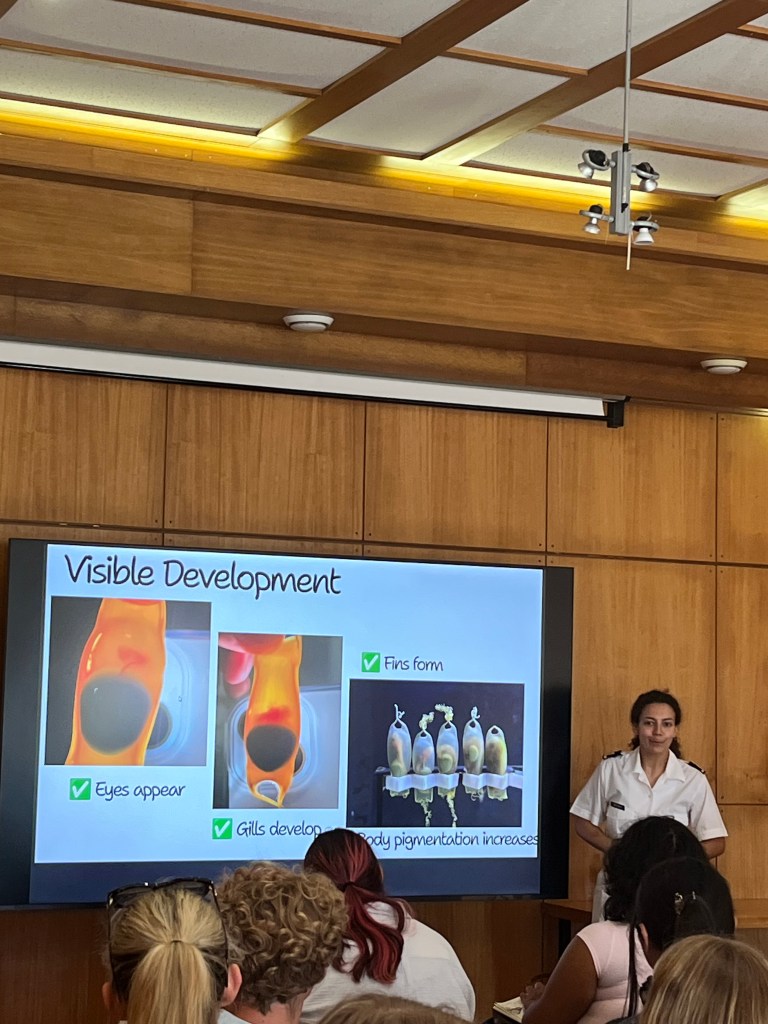
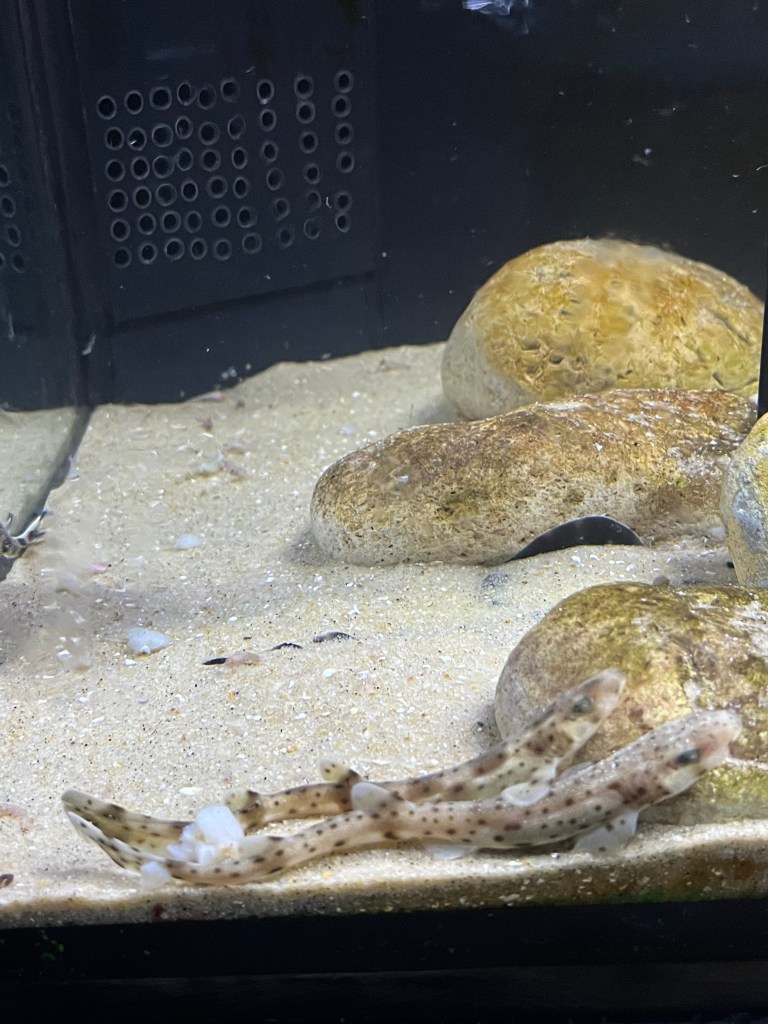
A video shows a Lesser spotted dogfish embryo bred in captivity by marine biologists and staff at the Vasco da Gama aquarium in Lisbon. It shows its development inside a protective, light-brown capsule. Young sharks hatch between 8 and 10 cm long and resemble adults.
Sharks Under Threat
The Lesser spotted dogfish population in Portugal is under heavy pressure from commercial fishing. Bottom trawling is especially destructive, as long, weighted nets dragged along the seabed severely affect marine biodiversity and ecosystems.
Fishing for the lesser spotted dogfish is currently not illegal in Portugal. However, data remain insufficient to evaluate its status, and marine biologists believe it is in decline. Better monitoring of landings and discards is vital to prevent further decline and support stronger protection. This is why coastal Marine Protected Areas are important: sharks are apex predators and help keep marine ecosystems in balance.
Recently, divers from the Cascais Naval Club (CNC) in Portugal witnessed and filmed a shocking and sad video (see below) of several dead juvenile lesser spotted dogfish lying on the bottom of Cascais Bay near the docking area. One possibility is that fishers discarded them because of their low economic value and because they take up space in small boats used for more lucrative fish. Another possibility is accidental bycatch. The Lesser spotted dogfish is sold in fish markets and several supermarkets. It is used in fish stews in Portugal and in fish and chips.
Credit: CNC Discarded lesser spotted dogfish- Cascais Bay
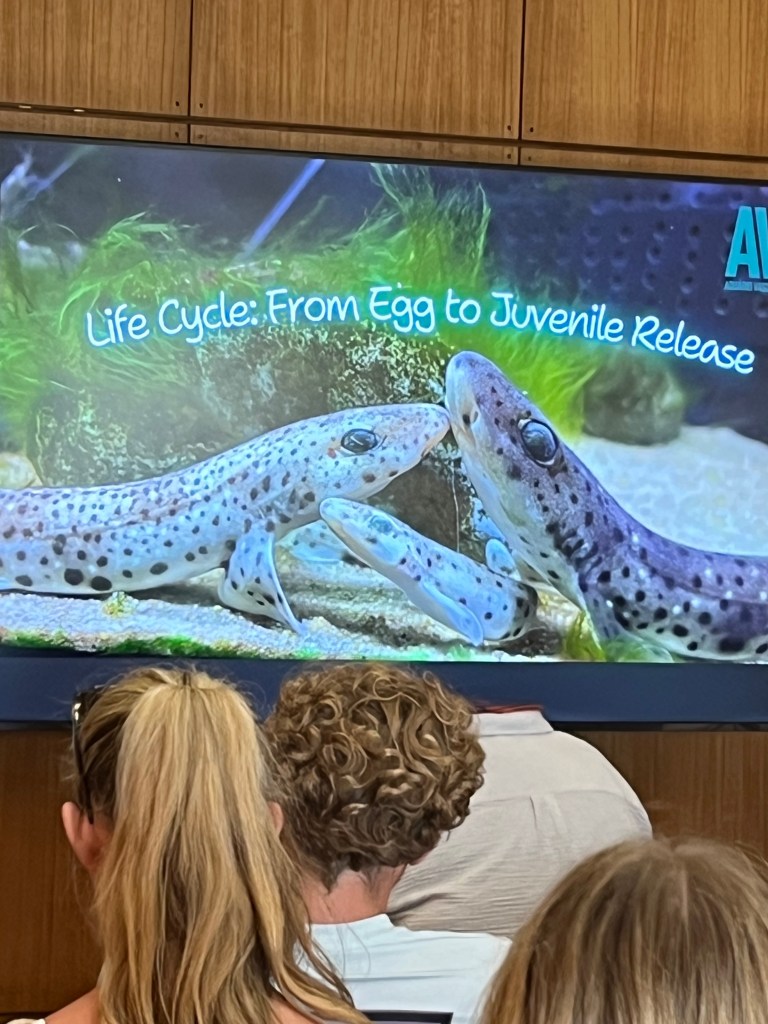
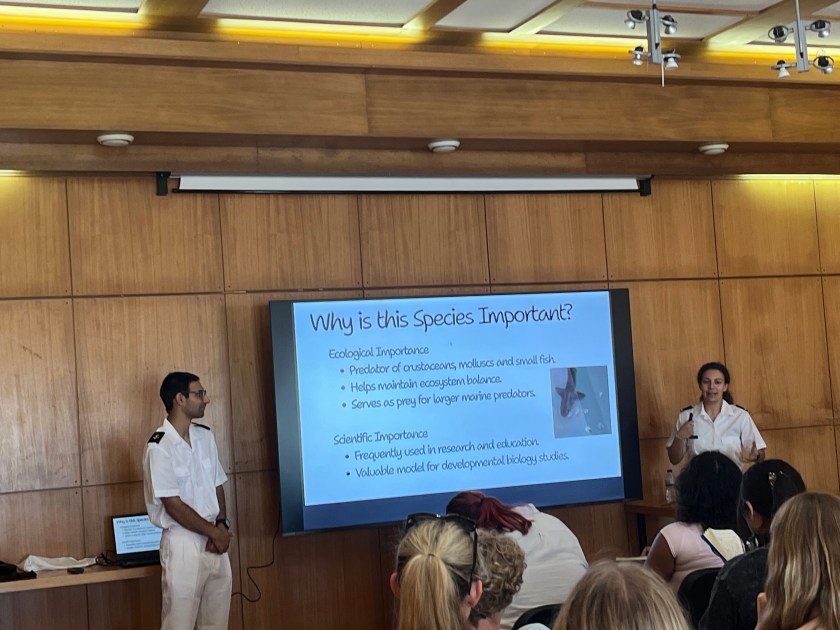
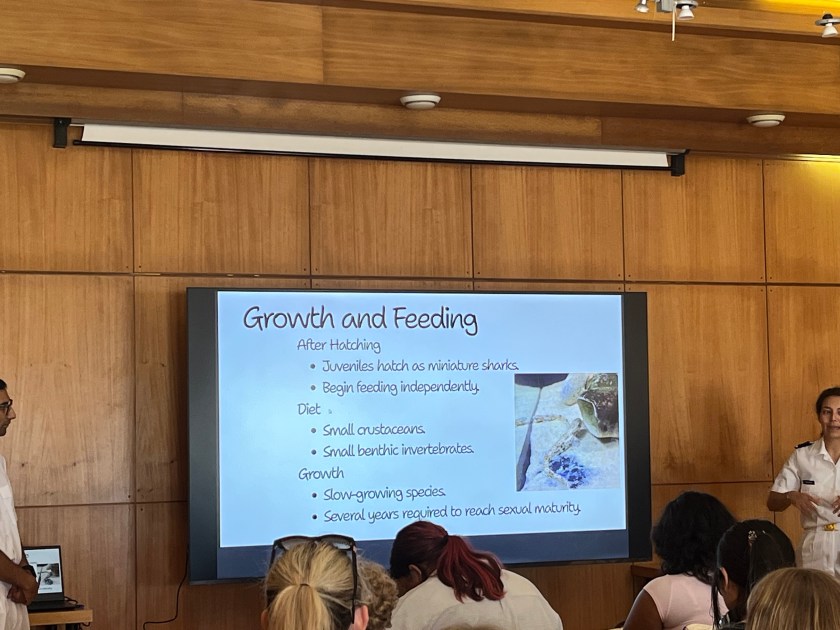
- The Lesser spotted dogfish life cycle Presentation by marine biologists working at the Vasco da Gama Aquarium in Lisbon . Summer school students learn about the life cycle: from egg to juvenile releases. This included visiting the lesser spotted dogfish and ray juvenile in aquarium tanks.
Coastal Marine Protected Area near Lisbon
Worldwide, MPAs play a key role in protecting marine ecosystems and their biodiversity, as well as restoring degraded habitats. They are especially important for sharks and other species under pressure. Monitoring these protected areas remains a global challenge, and education should play a key role in meeting it.
The proposed Marine Protected Area (MPA) for the Cascais, Mafra and Sintra councils (Area Marinha Protegida de Iniciativa Comunitária Cascais Mafra e Sintra – AMPIC) is being coordinated by Cascais Municipality and Oceano Azul Foundation.
In 2022, a scientific expedition supported by the Oceano Azul Foundation observed various ecosystems and fish species between 10 and 40 meters along the Cascais, Mafra and Sintra coast, the proposed future MPA. Marine biologists observed biodiversity and seaweed, including the Lesser spotted dogfish near the Cascais marina. Here lies Pedra da Pata-Rocha, 24 meters deep, a rocky formation known as a hot spot for this small shark.
The first MPA public debate will take place at the end of September 2026 in each of the three municipalities. Fishers, maritime tourism operators, marine associations and NGOs, and coastal community members from all three councils are invited to take part and help shape the future of this proposed inter-municipal marine protected area.
Ocean Literacy: Understanding and Protecting all Sharks
The key objective of Ocean Literacy is to promote understanding of the ocean’s influence on humanity and humanity’s influence on the ocean.
The European Blue School, or Escola Azul, network states that Ocean Literacy is “more than raising awareness; it also encourages citizens and stakeholders to behave more informedly and responsibly toward the Ocean and its resources. Ocean Literacy goes beyond knowledge. It is about using that knowledge to communicate, act, and decide, understanding that we have individual and collective responsibilities towards the Ocean.”
Educating students and the public about shark biology and conservation can help us better understand and protect this incredible species through responsible behavior. NGOs, local authorities, schools, and aquariums must work together to make this happen, because public understanding supports conservation action.
Raising Awareness through Community Actions
Below are some examples of successful initiatives that promote ocean literacy within schools and communities. These show how awareness can turn into action, and how everyone can contribute to protecting sharks and the ocean. They also support the value of Marine Protected Areas. Join these efforts and help expand their impact!
- Local schools, May 2026, Cascais – Portuguese high school students (11th Grade) learned about the biology of this lesser spotted dogfish .Later they also named and released several young of this shark species into Cascais Bay from aboard a traditional sailing ship. (Open Link). This field trip, supported by the Vasco da Gama Aquarium and the Cascais Municipality, helped students better understand this small shark and take part in a hands-on activity by seeing and releasing them. A great example of how students can connect directly with the ocean and better understand the importance of protecting its biodiversity.
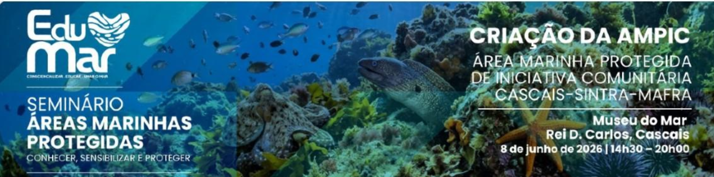
Seminar: Marine Protected Areas
- Marine Protected Area (MPA) Seminar – June 8th the “Creation of Marine Protected Areas as a Community Initiative” was a seminar held in the Museu do Mar in Cascais on World Ocean Day. Organized by the Environmental Education Association – ASPEA. The objective was to discuss the community initiative of this Cascais, Sintra and Mafra Coastal Marine Protected Area MPA. Speakers from a wide range of areas, including the Marine Protected Area in the Algarve Reef – Pedra de Valada, the spokesperson for the fishers, all supported this important initiative.
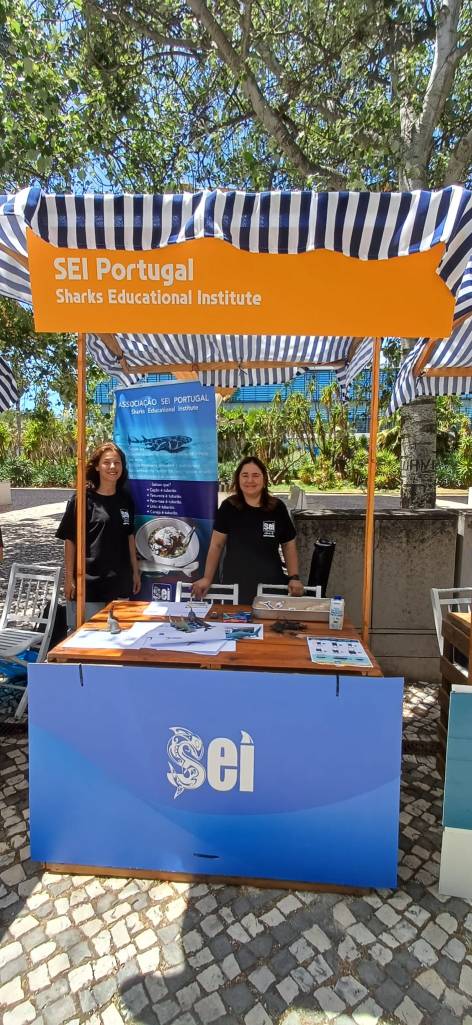
- Sharks Educational Institute – SEI Portugal, July 2026. SEI is a non-profit organization, regularly organizes workshops and presentations about shark and shark conservation. Sheila Alemeida, SEI’s recently elected president, gave an inspiring presentation to two groups of visiting US high school students. Shark Facts and Myths and What can you do to protect sharks? were the main topics addressed. These were held at the Lisbon Vasco da Gama Aquarium and at the Lisbon University.

- World Ocean Day- June 8 2026. SEI’s Information booth in front of the Oceanarium in Lisbon. Volunteers- sharing shark knowledge through educational games and coloring activities with the public.
- Beach cleanup and Egg hunt -SEI volunteers regularly organize beach cleanups. In addition to an “Egg Hunt” for shark and ray egg capsules washed up on beaches after stormy winter days. All are welcome to participate and help protect these species!
- SEI Portugal supports an international campaign informing people about the importance of this apex predator, but also the fact that mercury accumulates in shark tissues (bioaccumulation and bioamplification) and harms our health. In Portugal, several sharks, such as the Lesser spotted dogfish, are sold in fish markets and supermarkets under common names. This campaign aims to educate people to refrain from buying or ordering dishes made with shark species and choosing alternatives.
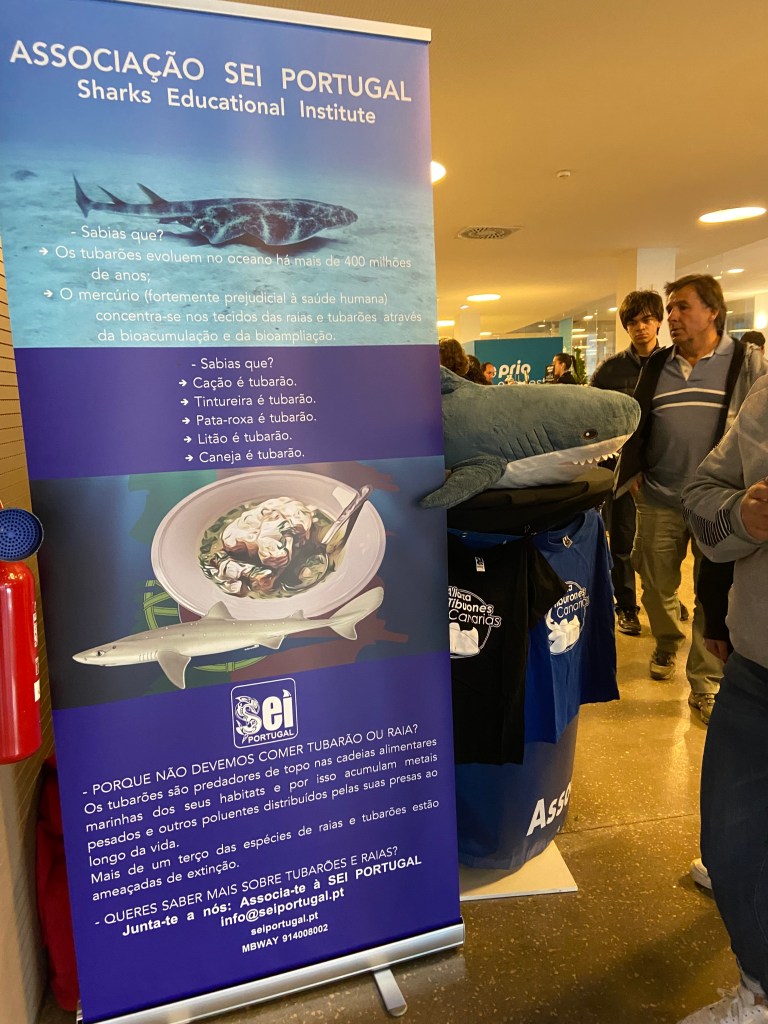
Photo credit: Nicole Mueller Januário
TEACHER RESOURCES
As you are planning your next school year, remember that ocean and shark conservation topics are applicable to your classes be they science, math or language!
- World Ocean Day.org check out their monthly campaigns and lists of actions.
- Relatório Científico – Expedição Oceano Azul Cascais/ Mafra/ Sintra 2023 (Scientific Expedition Report Cascais/Mafra/Sintra 2023)
Cover Photo credit: CascaisDive


