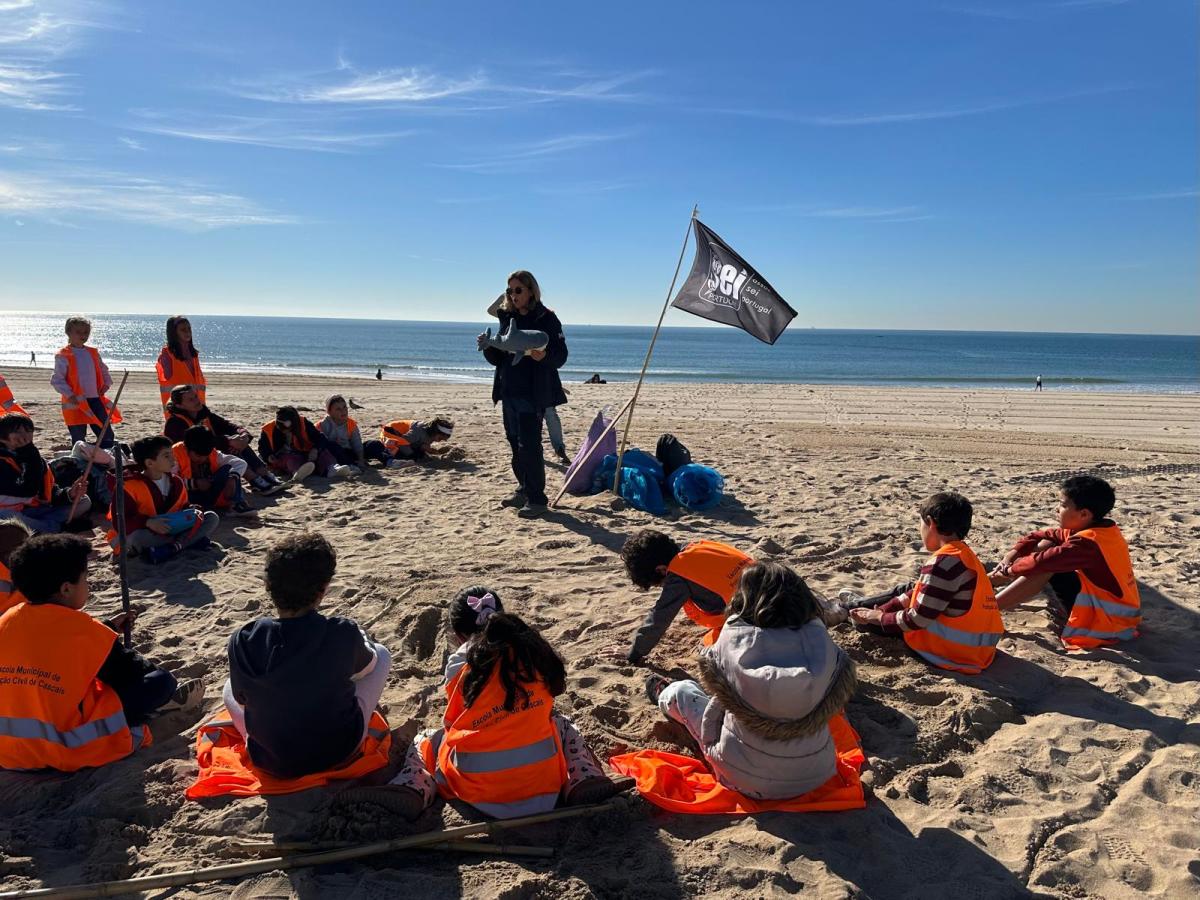
In the distance, excited high-pitched voices clearly could clearly be heard as groups of children arrived at the beach on a cold but bright, sunny day. These young students, aged 6-9, were ready for a different school morning in their large, open-air classroom with no walls.
From November 24-27, Sharks Educational Institute-SEI Portugal proudly joined the national initiative Education for a Blue Generation. Students and teachers actively participated in beach and school playground cleanups. They gave thanks to our blue planet and its valuable biodiversity during this Thanksgiving week and Ocean Decade (2020-2030).
SEI volunteers organized and led a series of beach cleanups and presentations within public Elementary schools promoting the Blue Generation initiative. Before the cleanup, students learned about our ocean covering 72% of our planet and is also the largest life-support system. They discussed the pros and cons of using plastic material. They also examined the difference between micro (less than 5mm) and nano plastics (invisible to the human eye). They also explored the negative impacts of plastic waste on our ocean and marine biodiversity. This includes the impact on sharks, a top predator and vital for a balanced marine ecosystem. Q&A sessions allowed students to ask questions and express their opinions. The dedication and interest students demonstrated, along with the teacher’s support, were amazing! Let’s continue educating all our students to become truly blue citizens.
Ocean Literacy for Elementary Teachers and Students
Research about Ocean Literacy clearly indicates that Elementary school teachers are interested teaching about the ocean. However, they lacked both training and resources.
The Education for a Blue Generation or Educar para uma geração azul campaign aims to promote ocean literacy in Elementary schools (ages 6-10) throughout Portugal. The Fundação Oceano Azul Association supports this campaign. “Students for the Blue Generation will be future decision makers who recognize and value the importance of the ocean for a sustainable future of our planet.”
Teachers play a key role not only in teaching but also in motivating students about the importance of the ocean. An integrated and multidisciplinary format is provided. It aligns with the Grades 1-4 curriculum and follows guidance from the European Union (EU) and UNESCO. Training and educational resources have overcome barriers. They enable teachers to become informed. Teachers can now present and explore ocean topics with their students. Successful teacher training sessions have been held in different towns over the past two years.
This document defines the principles and vision that will shape the students within the Blue Curriculum. It outlines the values and skills that students should acquire through the school curriculum. We hope these values foster specific character traits that, in turn, lead to new behaviors and attitudes. We hope the acquired skills influence and inform future behaviors, and that these behaviors are based on a strong humanistic and scientific culture. These behaviors will be informed, consistent, and able to change the social and environmental reality, thus generating a concrete impact. “
For more information about Ocean Literacy please read my post Understanding Ocean Literacy (25.09.2025)
Lesson Ideas
Class discussion: After the beach clean-up, discuss what the students learned. Talk about the most amazing or surprising object they picked up. How did they feel ?
English and Foreign Language Lessons: Ask students to write a short story/poem about what they learned or a strange plastic object they found.
Writing Prompts examples:
I helped the ocean today by…”
The most surprising thing I found was…”
Next time, I want to…”
If the sea animals could thank us, they would say…”
Read a story (out loud) and discuss. Before reading, create a KWL chart: What I Know, What I want to Know, What I Learned. For further practice comprehension and vocabulary exercises can also be included. (See virtual Blue Library in this blog)
Mini Science Lesson: Maine plastic pollution is a serious problem. Inform students about plastic and its threats.
How plastic floats in water.
Compare “decomposition time” chart for paper vs. plastic.
Explain how animals can mistake trash for food (age-appropriate, gentle).
Ghost gear and the associated problems.
Discuss ways to reduce plastic at home and at school. Organize games or a plastic free day
Students pledge one action to reduce plastic waste. For example, no plastic straws!
Geography: Coastal ecosystems Teach about:
Marine habitats
Erosion
How pollution travels through currents. For example, the Great Pacific Garbage Patch.
Invite a credible NGO, like SEI Portugal, to come to your school and deliver a workshop for students or teachers. We are are also available to adapt our activities to your specific curriculum needs.
Ocean Themed Art
Trash-to-Treasure Collage: Use paper scraps or clean recyclables from class (not the beach trash) to make ocean animals.
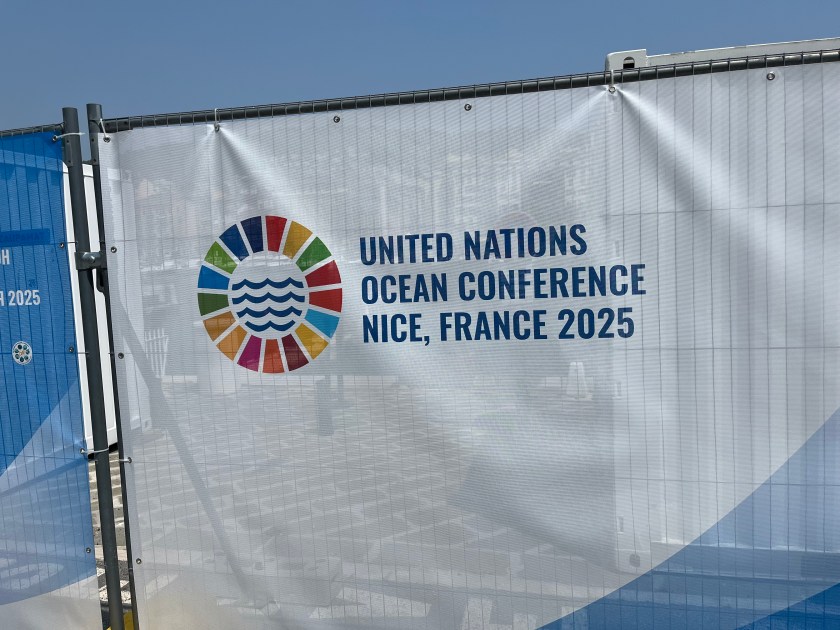
The Third United Nations Ocean Conference, better known as UNOC3, officially ended on June 13th. However, the commitment to protect oceans and their biodiversity, including sharks, continues with renewed energy. It carries hope and, above all, urgency. I would also like to take the opportunity to thank both the Sharks Educational Institute SEI and the Fundação Oceano Azul (Portugal) for their generous support. This enabled me to attend as a nongovernmental – NGO delegate with a UN special accreditation. Here I was able to witness, firsthand, both the governmental events and the more open public events. Besides an important educational opportunity I learned the importance of dialogue but also the urgent need for governments to act and protect our ocean and its unique and vital biodiversity NOW.
UNOC 3 brought together over 15,000 global leaders, ocean experts, policymakers, industry stakeholders, indigenous communities, and civil society to forge new pathways for action. Governments also reviewed progress on Sustainable Development Goal 14 (“Life Below Water”) and aimed to galvanize global commitments to restore and protect marine environments.
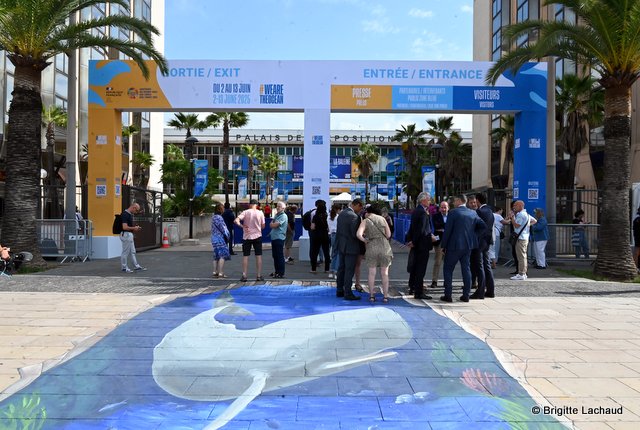
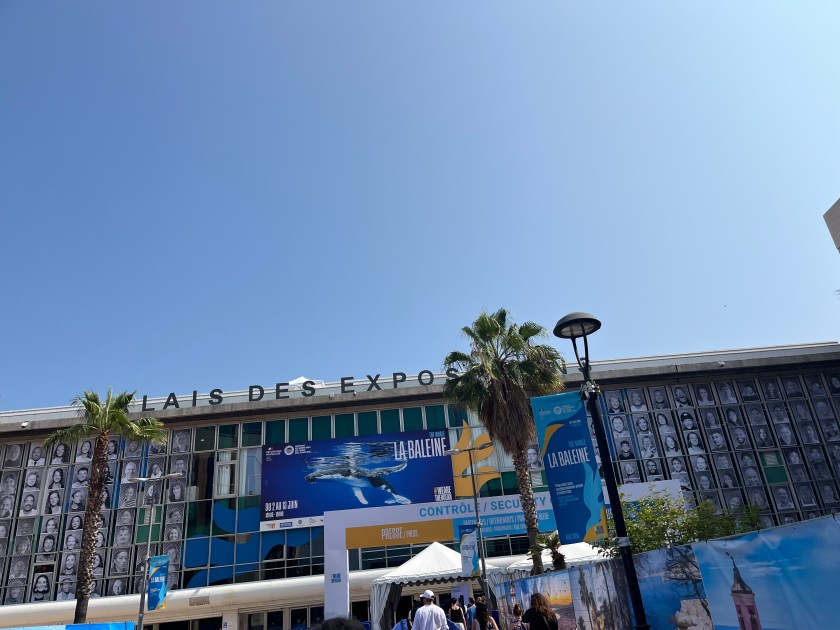
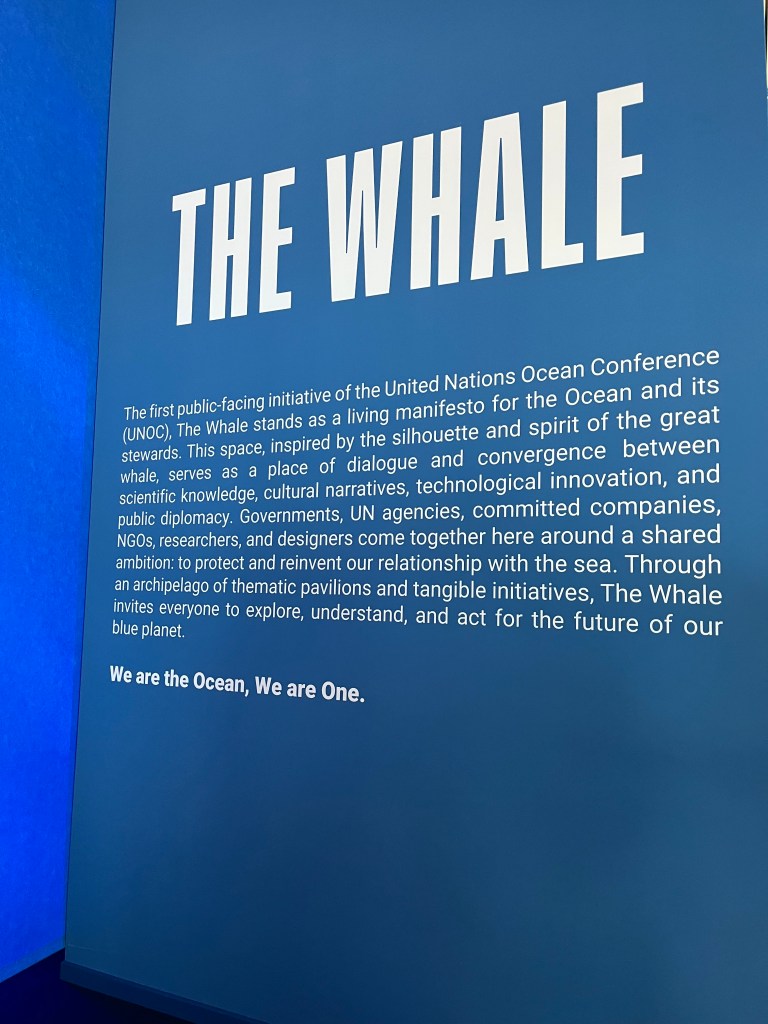
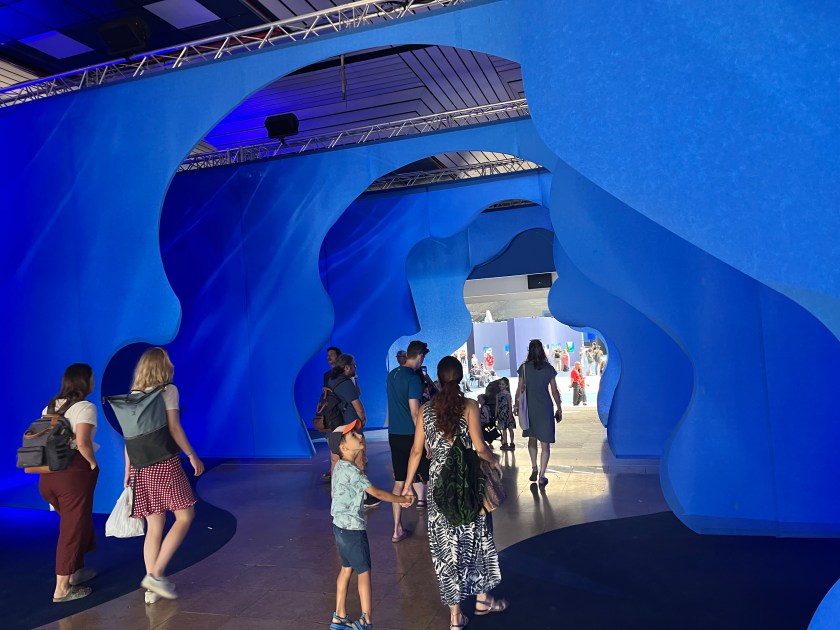
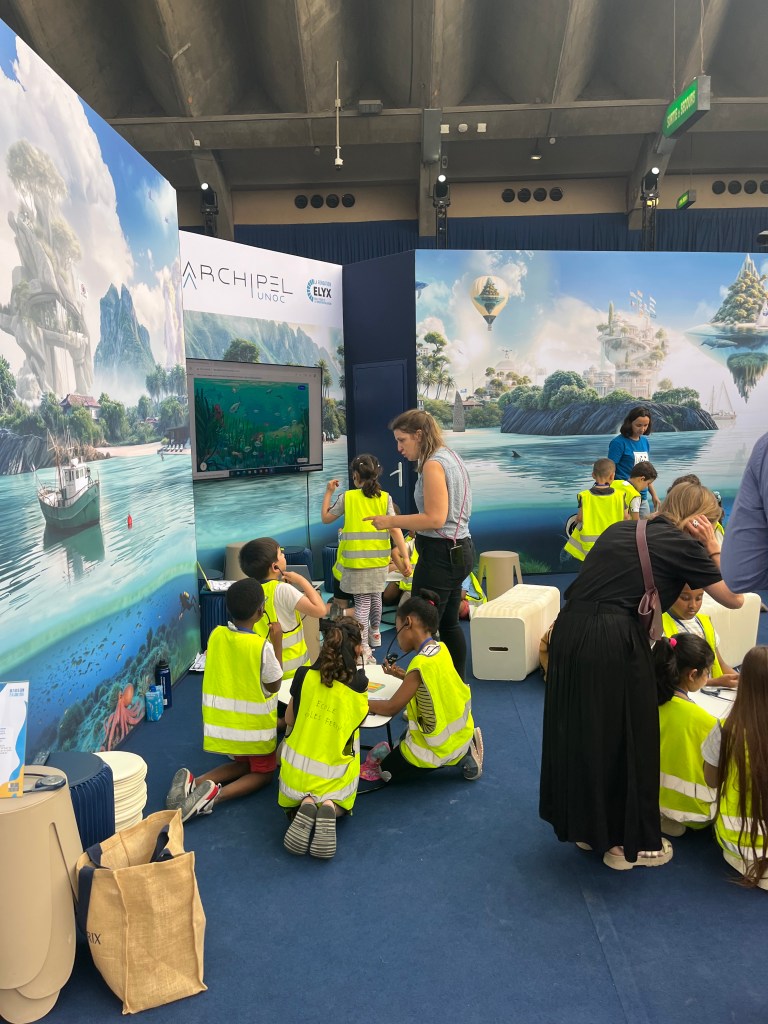
The La Baleine (The Whale), situated in the expansive Palais des Expositions, featured thematic pavilions, exhibitions, events, workshops, and more. Free of charge, it united the public, including schools, residents, tourists, with the ocean community in a positive and informative way.
UNOC 3 Conclusions
Were all the objectives achieved at this governmental conference? Unfortunately, not; however, below is a list of the most critical outcomes of nine important broad topics that guide the conference. Including Education and Public Engagement, which focus on building ocean literacy and fostering a global sense of stewardship, and is crucial for long-term success.
The High Seas Treaty, also known as the Biodiversity Beyond National Jurisdiction (BBNJ)Agreement, reached the critical milestone with 50 ratifications, yet 10 short of the number needed for it to enter into force to create the first-ever legally binding agreement to govern marine diversity in international waters. These cover two-thirds of the ocean lying beyond national jurisdiction. This agreement may come into force in January 2026, as 17 countries are reportedly undergoing the ratification process.
Marine Protected Areas (MPAs) – More than 20 new protected areas were announced, including the Pacific waters around French Polynesia, an area twice the size of France. These are currently protected under the global goal to conserve 30% of the ocean by 2030, also known as the 30×30 campaign.
End Plastic Pollution: 96 countries endorsed a full-cycle approach to cutting plastic production and consumption. Showing renewed political commitment before the negotiation in Geneva next month, August 5-14.
Ocean Noise Pollution: Panama and Canada led the launch of the High Ambition Coalition for a Quiet Ocean. The first global political coalition dedicated to reducing underwater noise pollution from shipping severely impacts whales, dolphins, fish, including sharks, and invertebrates. These sentient animals suffer from chronic stress and behavioral disruption due to the noise pollution.
Aquatic Life vs Marine Resources
Progress in these areas was positive, but conservation efforts still centered on how humans can utilize the ocean to their maximum benefit. While there is a scientific consensus that aquatic animals are sentient, and rising public concern for their welfare, they are often exclusively framed as marine resources to be managed, caught, grown, or traded, rather than as individuals with the capacity to suffer or the right to humane treatment.
To this, I would add that, just like terrestrial food chains, aquatic food chains are equally essential and play an intricate role in maintaining a balanced marine ecosystem. Sharks, for example, are top predators that feed upon dead, sick, or weak marine animals, which are vital in maintaining a healthy ocean.
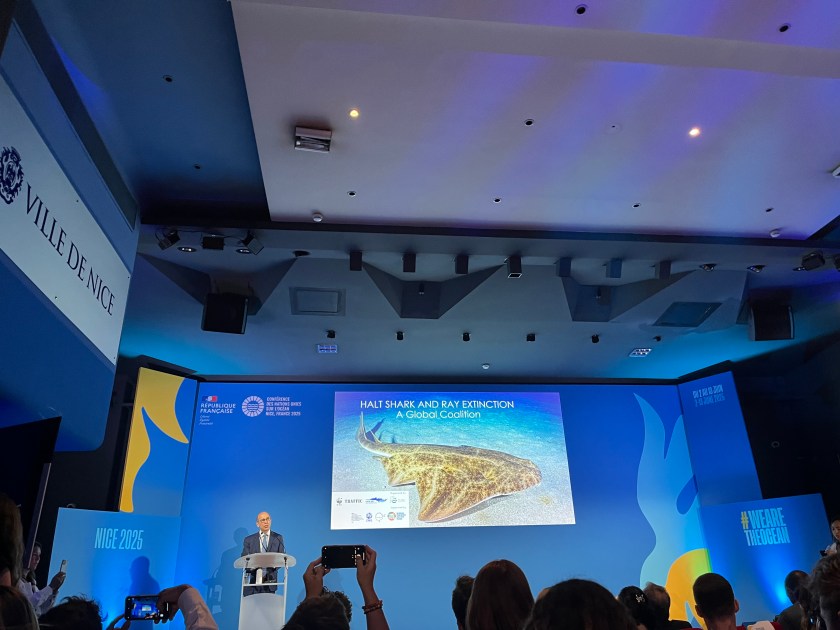
The French Minister of Ecological Transition, Ms. Agnès Pannier-Runacher, launched the Global Coalition to Halt the Extinction of Threatened Sharks and Rays, calling on countries worldwide to step up and support the initiative. So far, nine countries have signed the Declaration to join this Coalition, with more expected to join soon, as well as numerous partner organizations.
This successful event was organized by the IUCN Species Survival Commission, WWF, and TRAFFIC, with support from more than 50 partners, including the Sharks Educational Institute (SEI).See dedicated webpage .
Several presentations highlighted the urgent need for this overdue Coalition. In a rare moment where NGOs and Governments stood together and agreed upon:
High-level actions to protect critical habitats and species
Regulate fisheries and trade
Ensure regional and international cooperation
The three specific actions proposed to secure the long-term survival of sharks and rays include:
Protecting Key Habitats and Secure Ecological Connectivity
Ensure Sustainable and Legal Trade
Establishing a Global Intergovernmental Task Force on Sharkand Ray Species
Necessary Urgent Action
It is only through dialogue and discussions, both at the NGO and governmental levels, as well as increasing ocean literacy that we can secure further commitments to protect the ocean, its biodiversity, which includes all shark species.
However, time is running short. With summer upon us here in the Northern Hemisphere, in June/July we have already seen an exceptional marine heat wave in both the Mediterranean and Western Europe with temperature increase of up to 4ºC, and several rays are visible near the coastline or on the shore. Additionally, towns near the Arctic Circle are experiencing temperatures of 30 °C, double their normal temperatures. It is time for all of us to do our part and protect our one and only ocean as all marine life including sharks- the top marine predators.
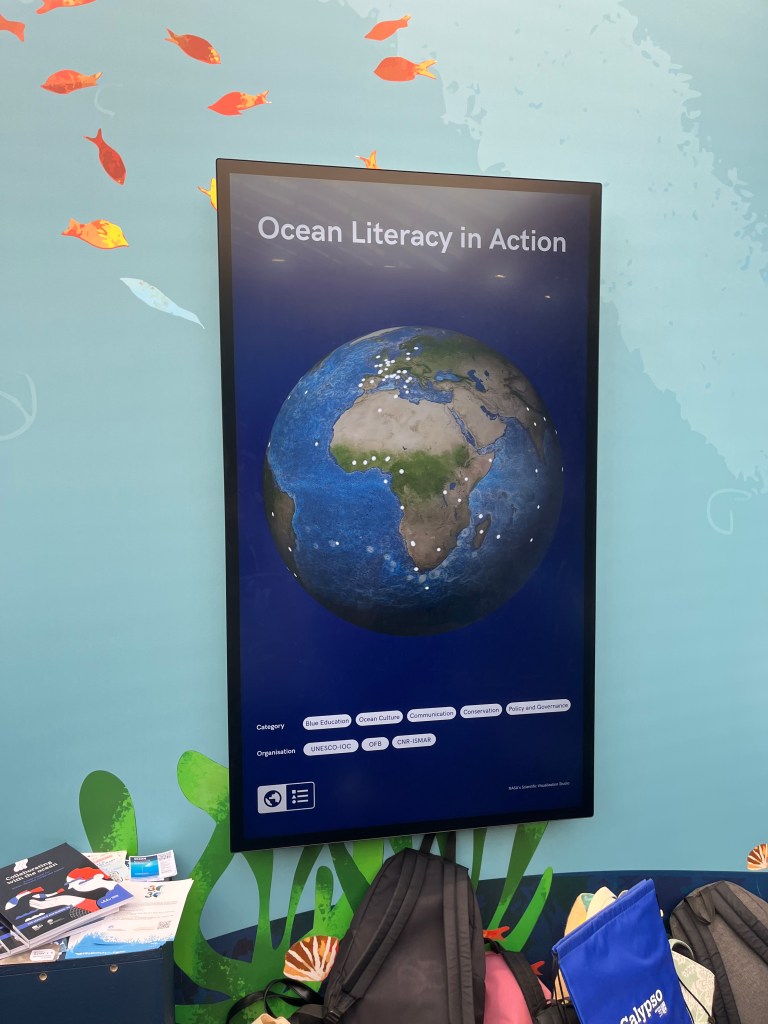
Global Call to Action for Ocean Literacy
The governments of France, Australia Brazil and French Polynesia jointly made a concrete pledge to advance Ocean Literacy as a key enabler of ocean action and sustainability. (See Call to Action from Venice to Nice to Belem)
Pledges may include commitments in different areas such as education, research, policy, communications, capacity development, or community engagement. All contributions will be instrumental in supporting the implementation of SDG 14 and strengthening the global Ocean Literacy movement.
These pledges or commitments can take many forms—large or small—but they should be action-oriented, realistic, and measurable, to facilitate progress tracking and celebrate results at the next UN Ocean Conference in three years.
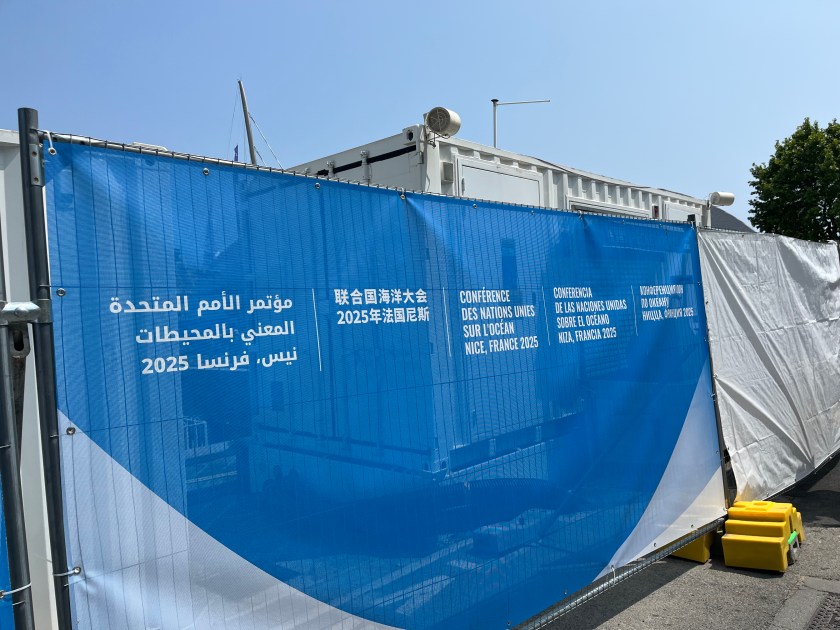
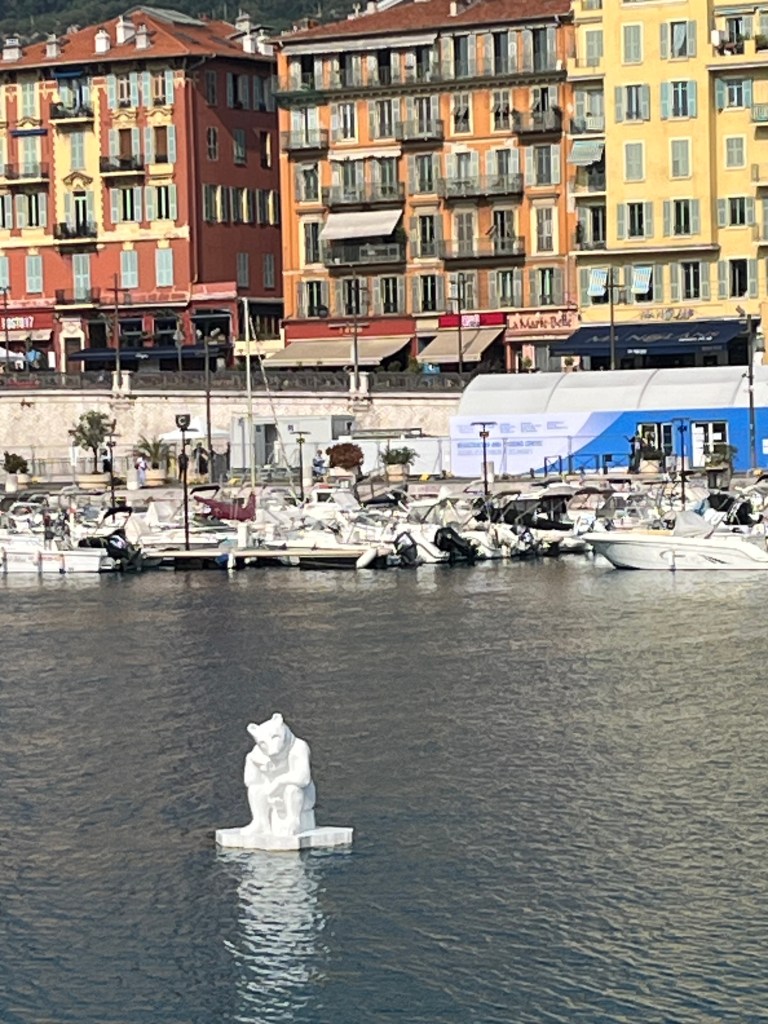
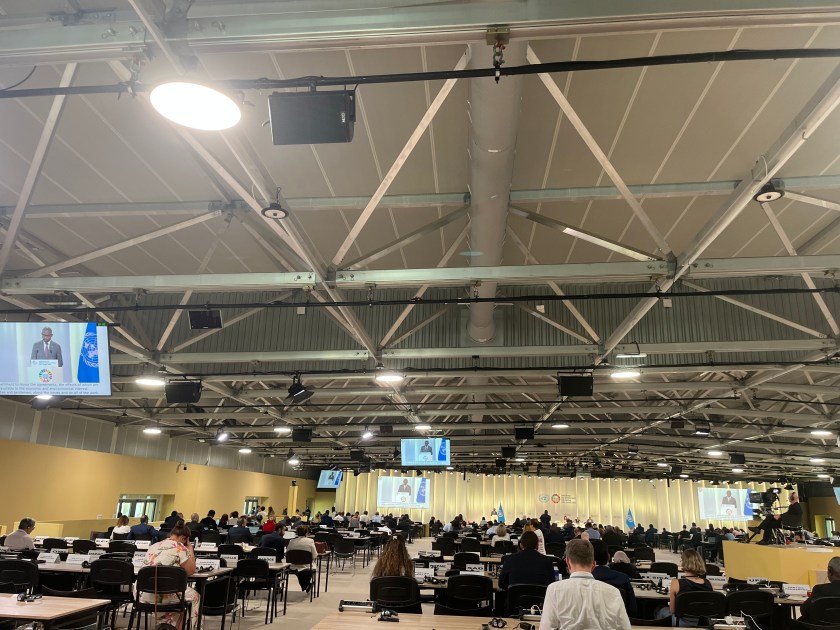
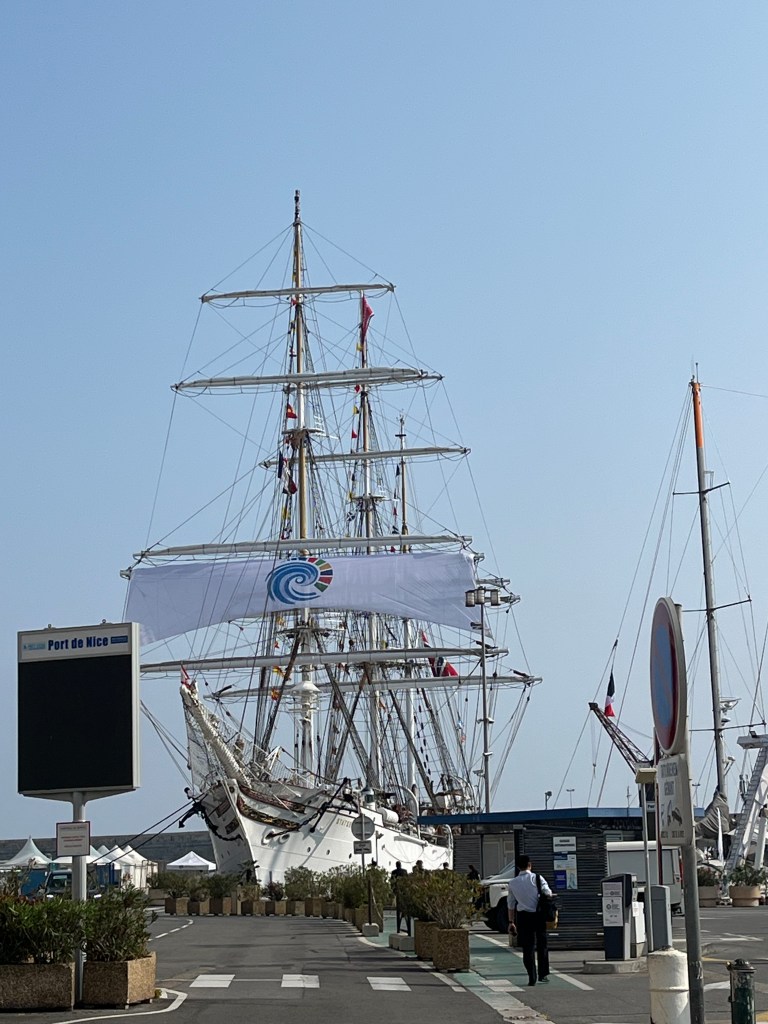
Below are photos some of the very informative workshops, events, exhibitions at the UNOC3 in Nice, France.
PHOTO SLIDESHOW
(Photos: Nicole MJ)
Welcome to UNOC 3 in action!
Entrance to Blue Zone- for Governments
Art Sculpture in Port Lympia, Nice
Governmental Ministers opening speeches
Ocean Science Students onboard Norwegian Tallship
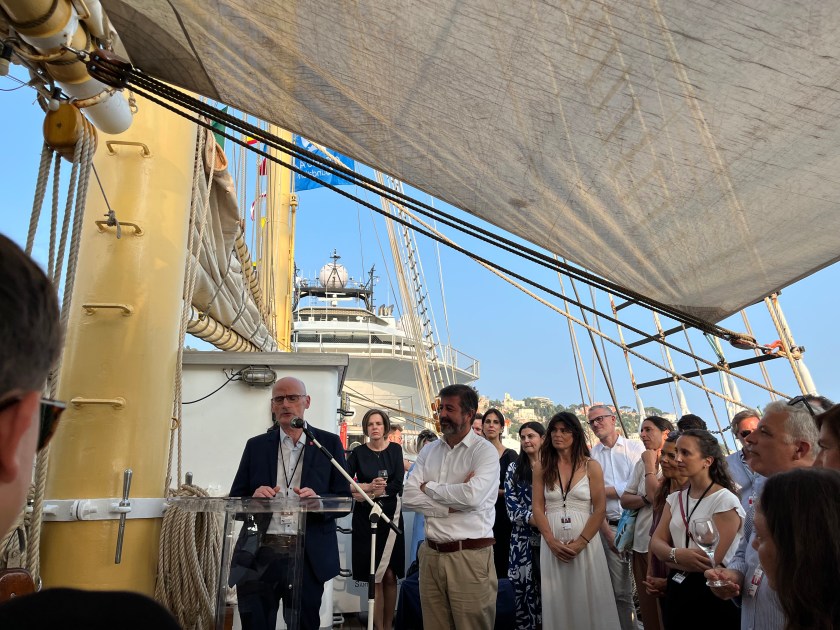
Oceano Azul reception for NGOs onboard the historic Santa Maria Manuela
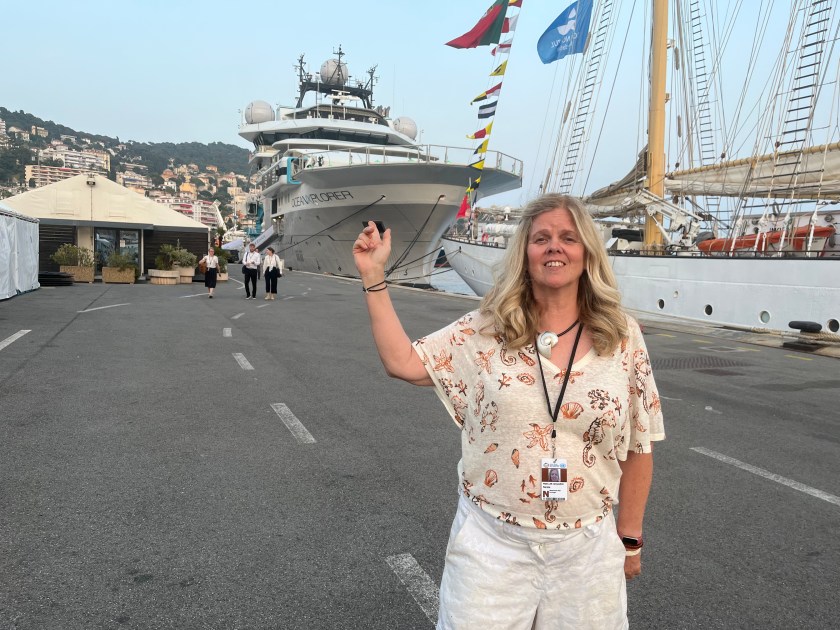
The amazing OceanXplorer scientific ocean research Vessel
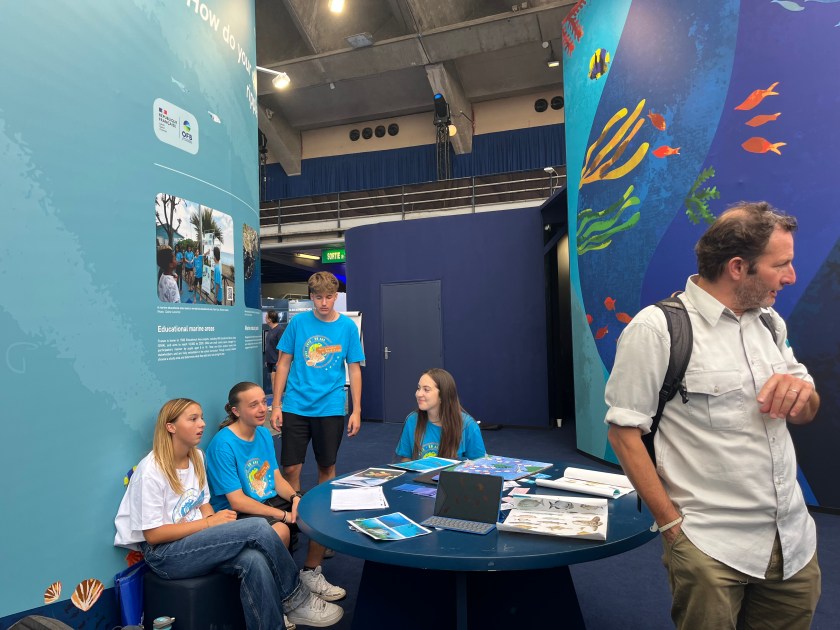
Public Entrance to the La Baleine /The Whale or Green Zone
Entrance with ocean sounds
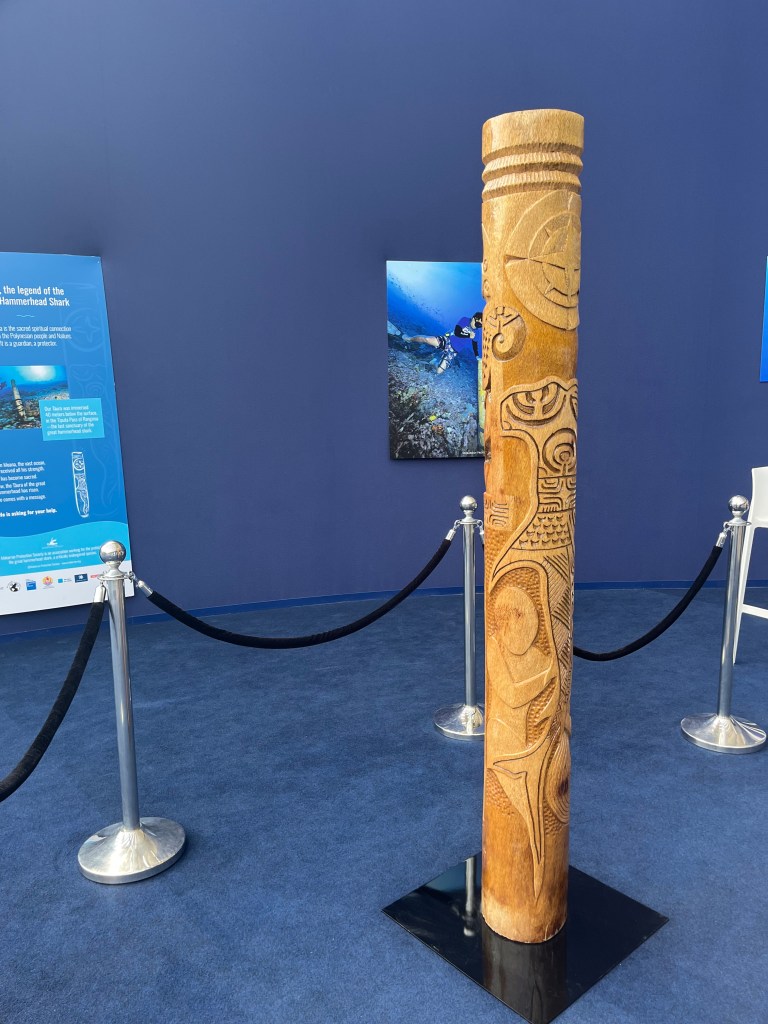
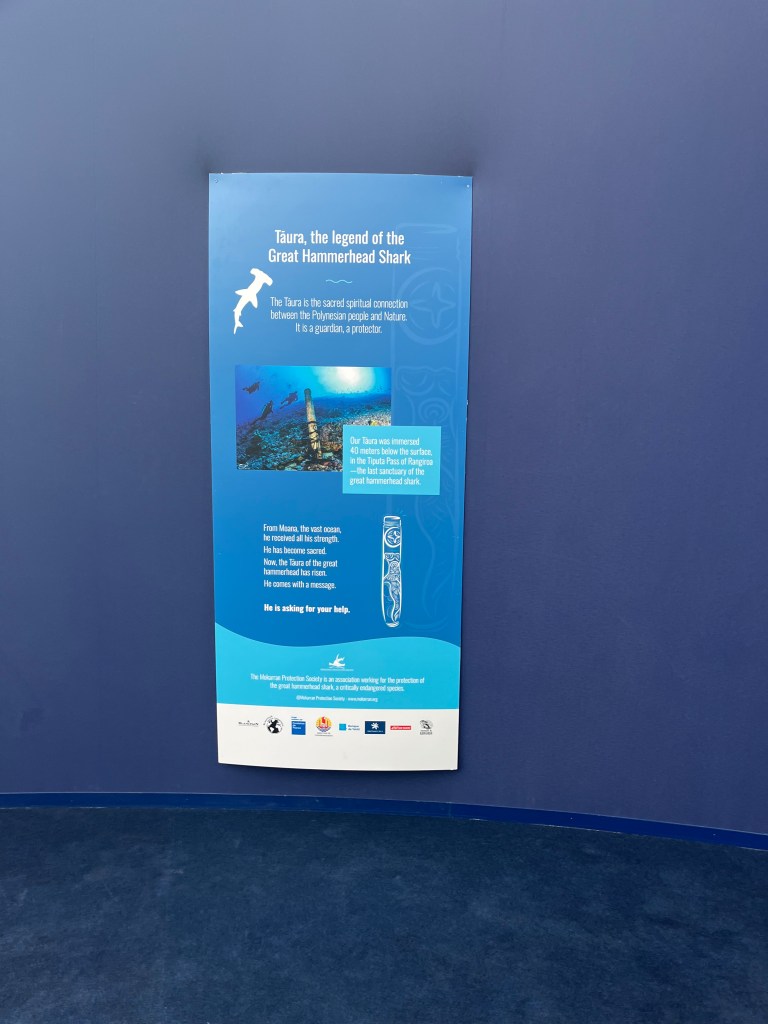
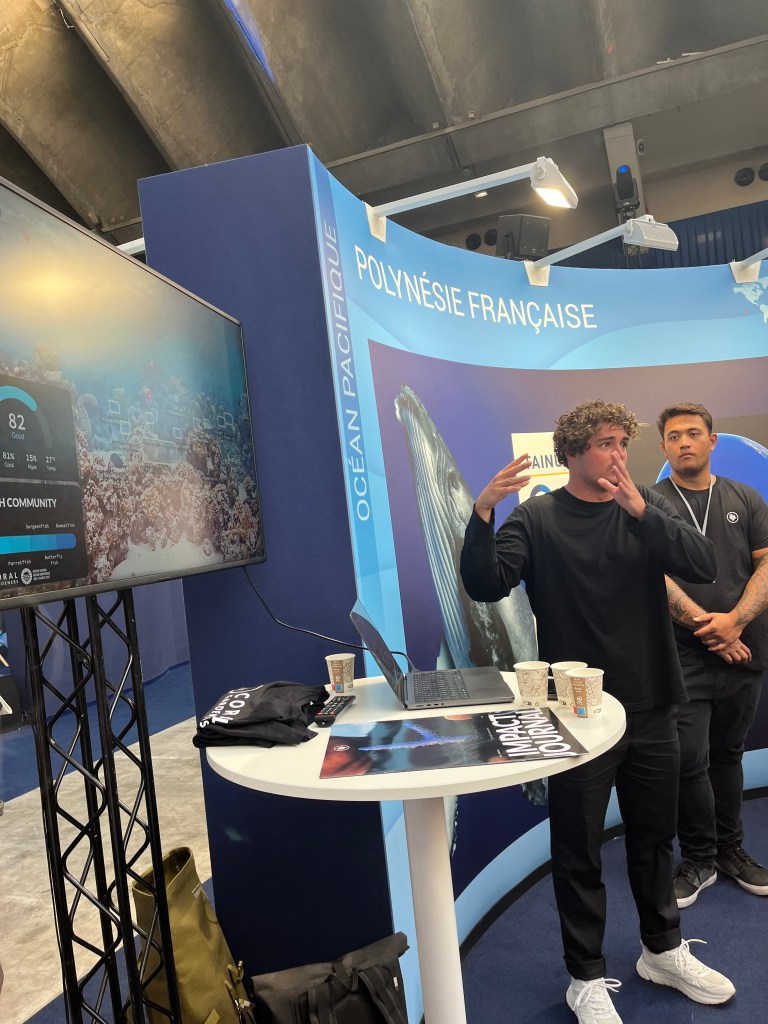
Taura -spiritual connection between Polynesians and nature
The Legend of the Great Hammerhead shark
UNESCO´s Exhibition and space
Local students present their projects
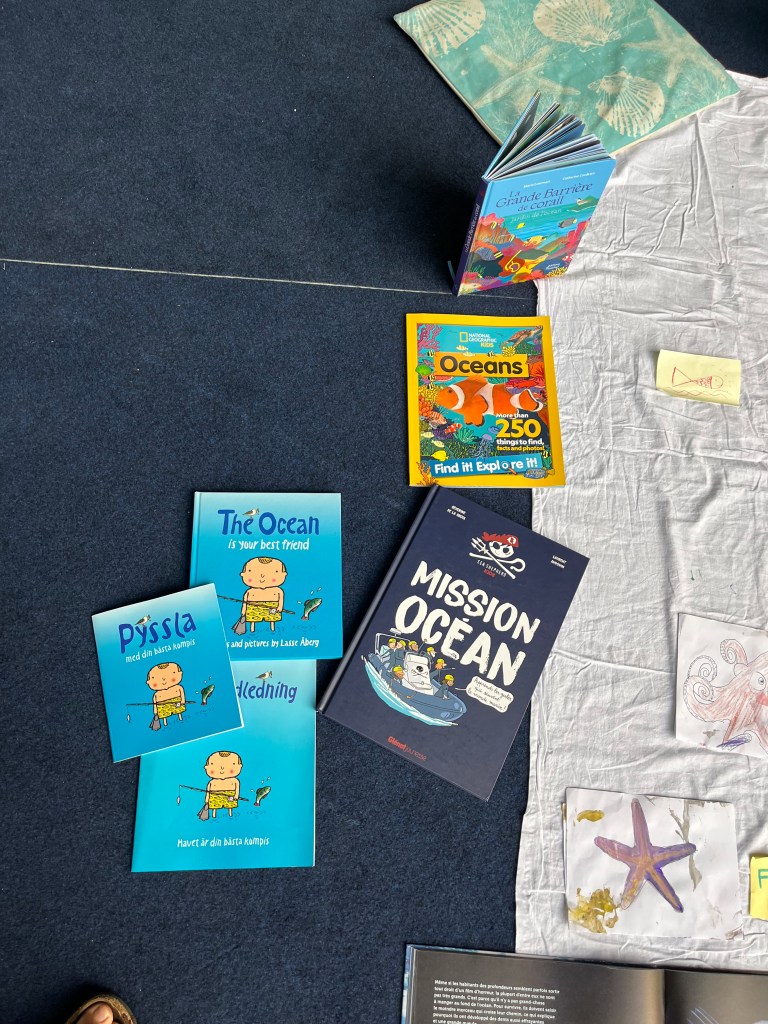
Library with books on oceans
UNESCO ocean Literacy rep rep
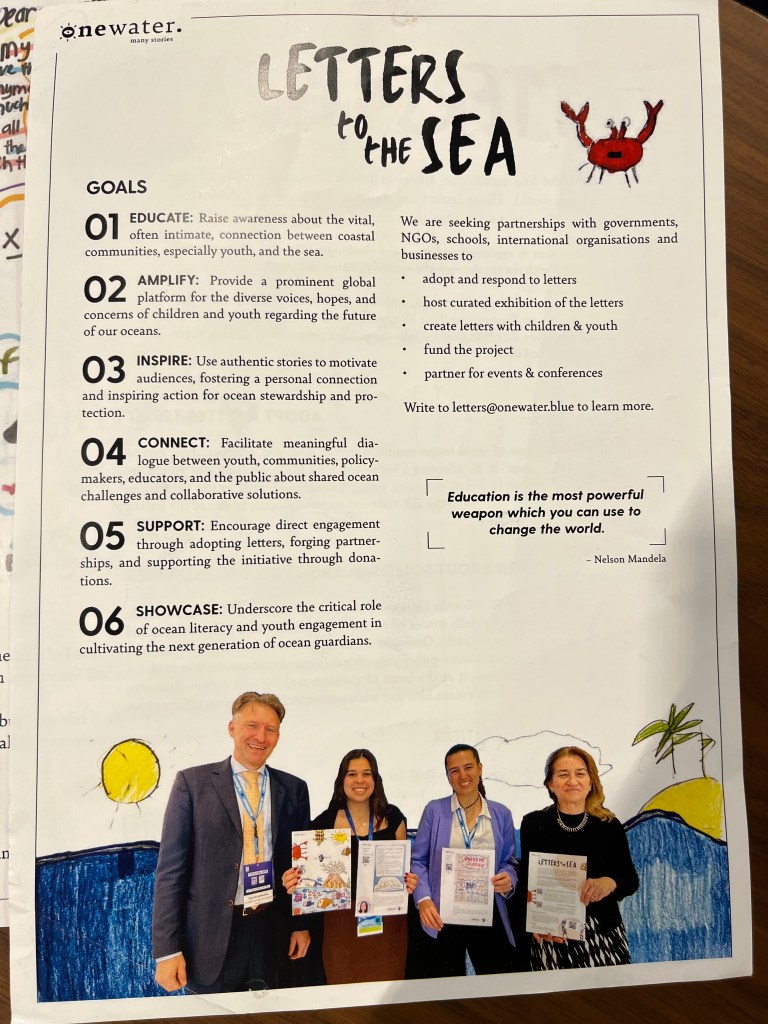
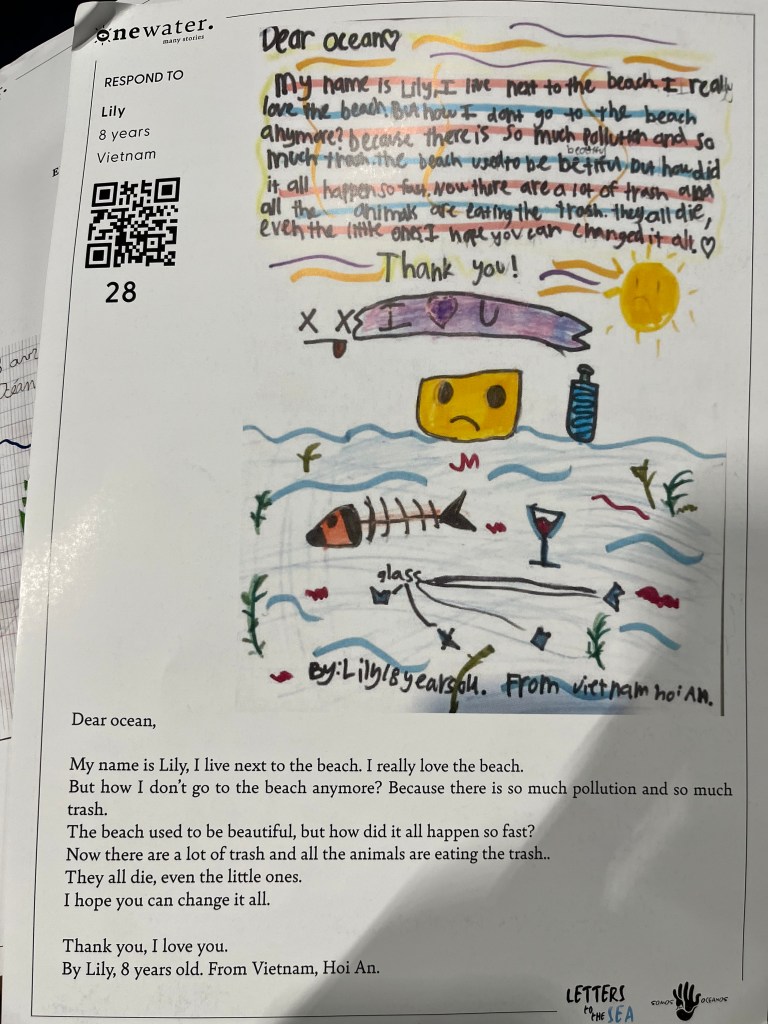
Letters to the Sea School project -www.onewater.blue
Letters to the Sea example- Vietnam 8 years old
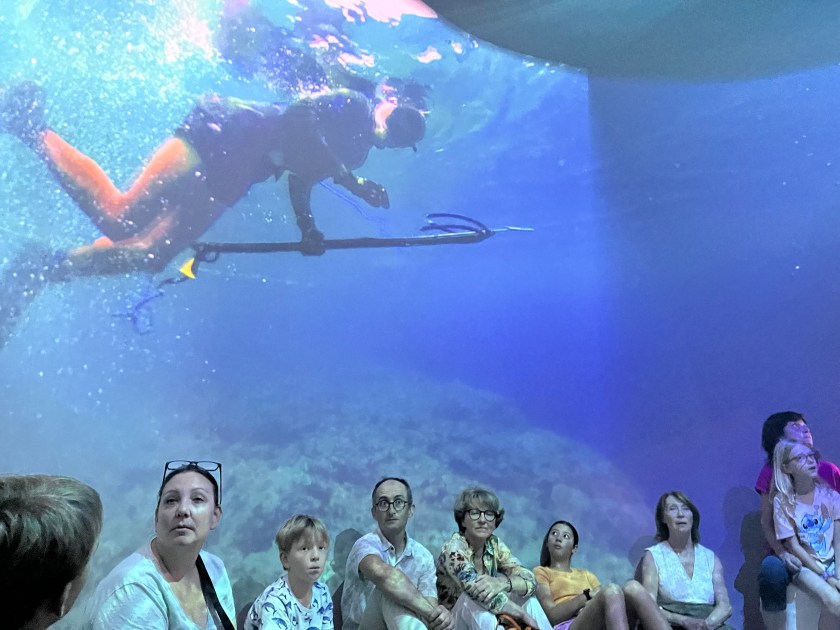
A 360 degree underwater show -The nature conservancy
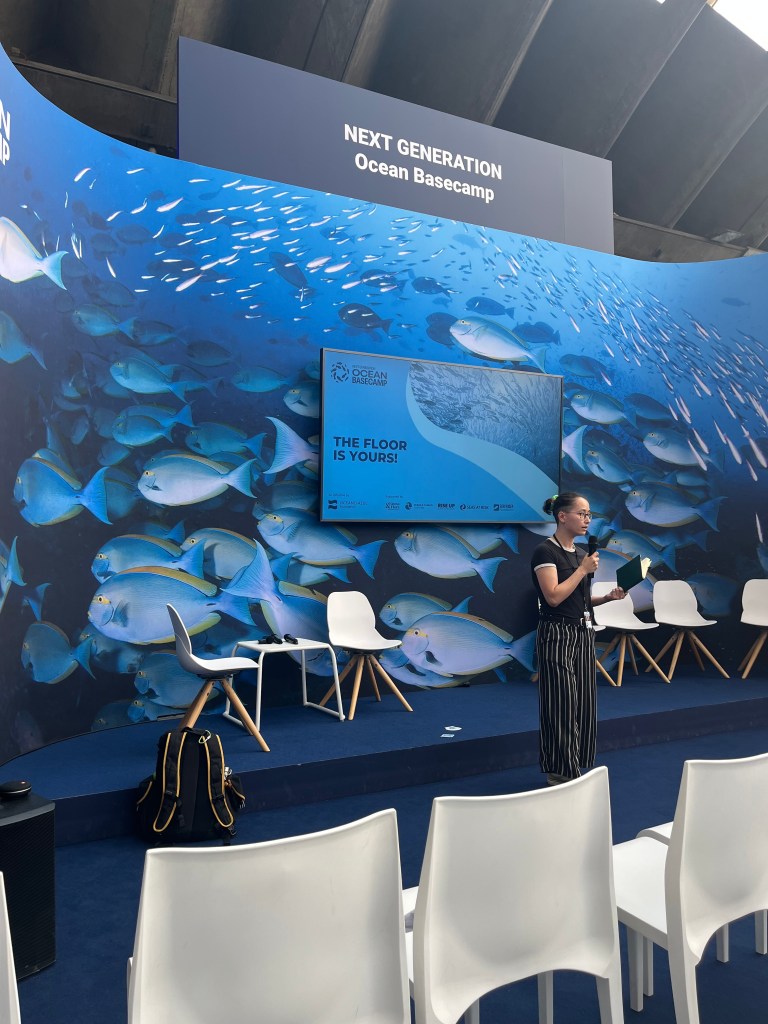
Ocean Base Camp – open mic
Shark & Ray Global Coalition Launched
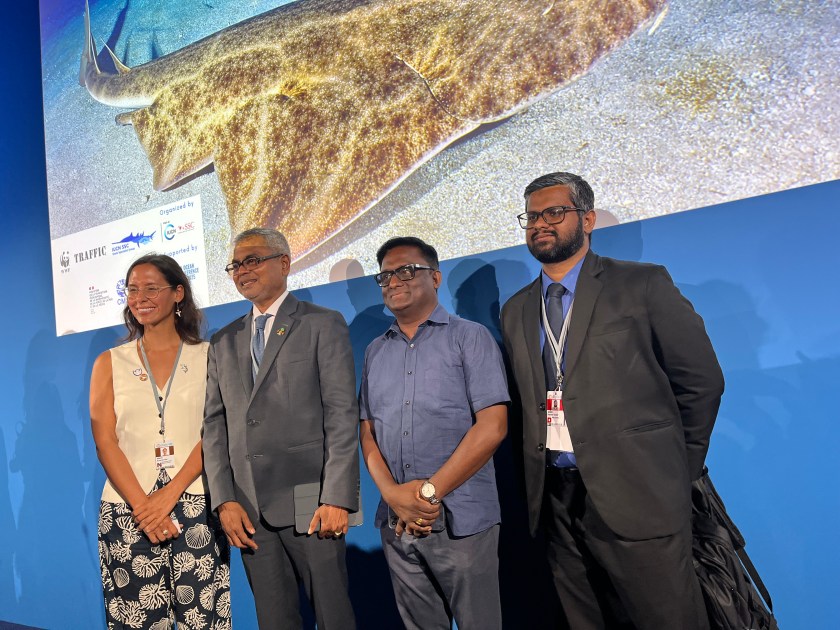
Maldives Minister and NGO rep
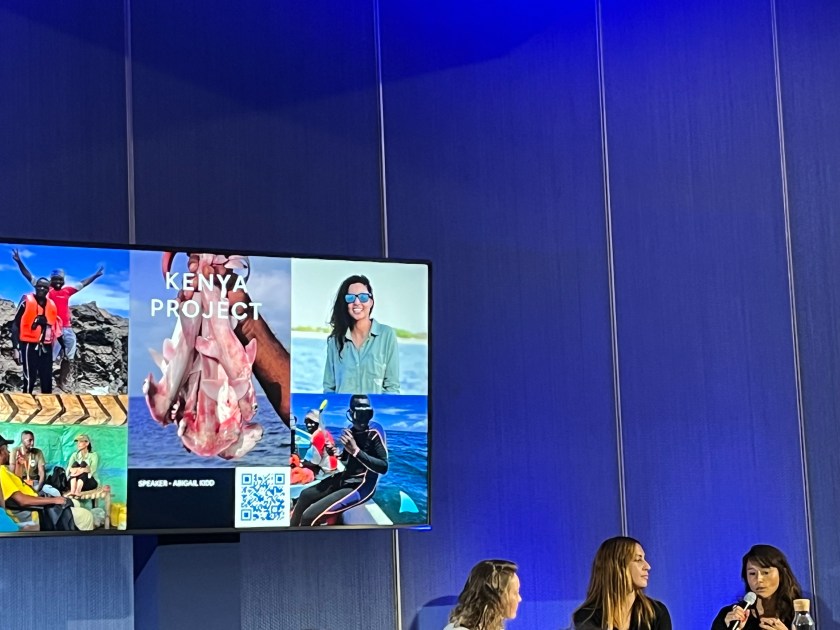
Women and Shark conservation presentation
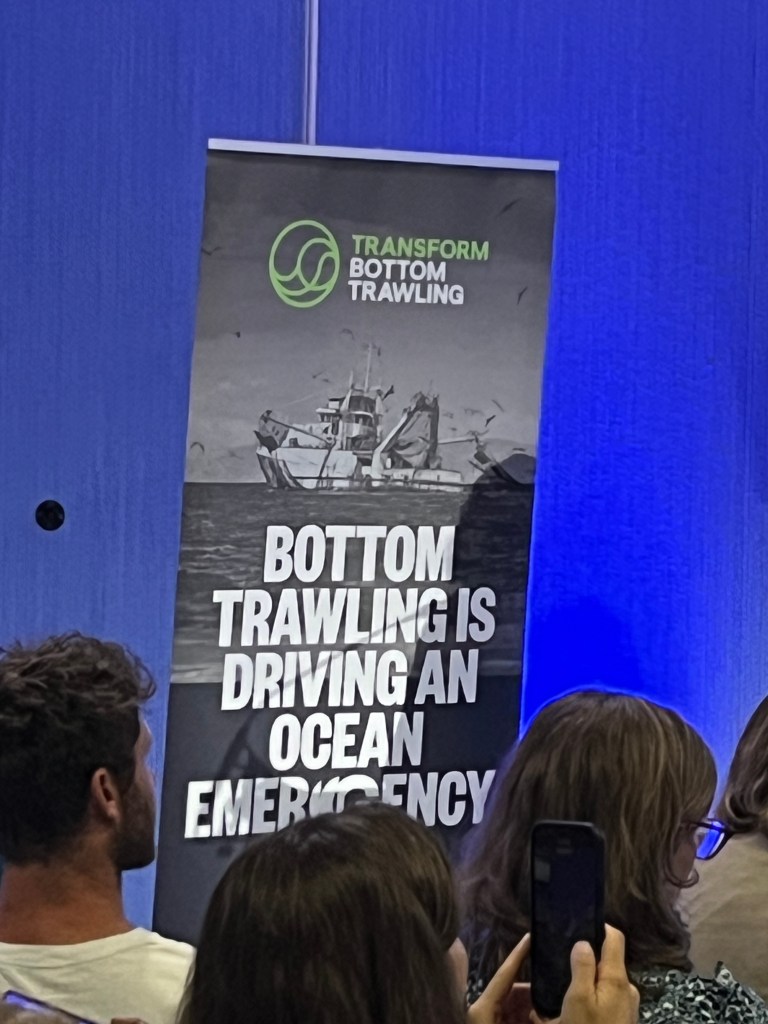
Transfor Bottom Trawling presentatin
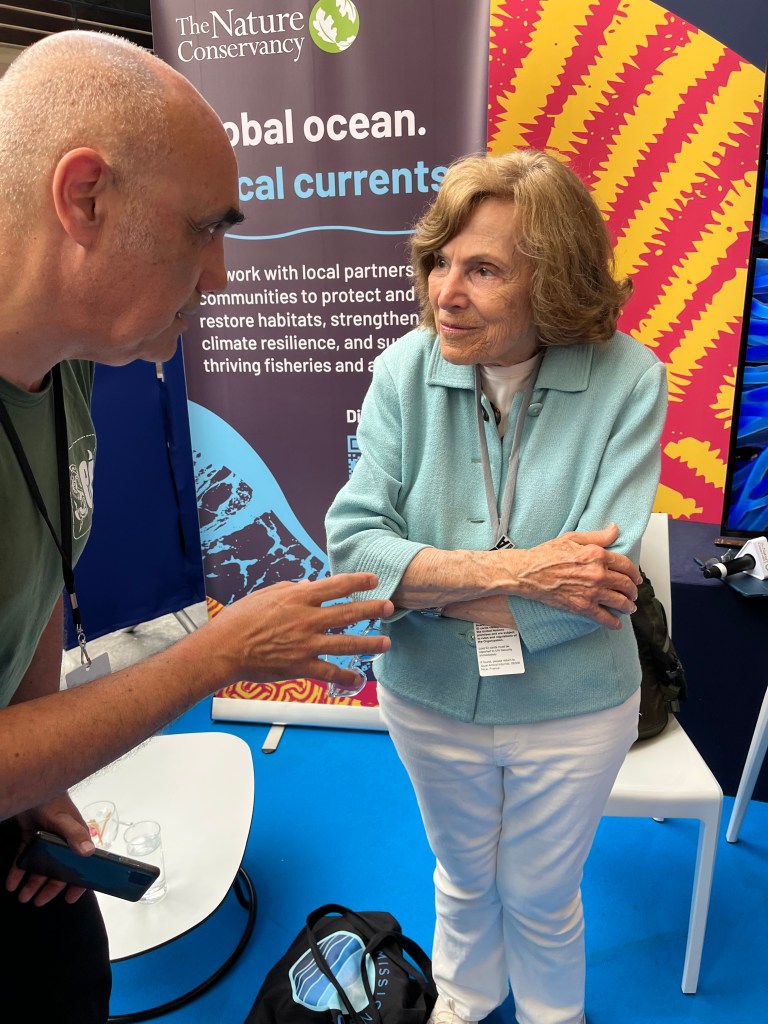
Sylvia Earle with SEI Fernando Reis
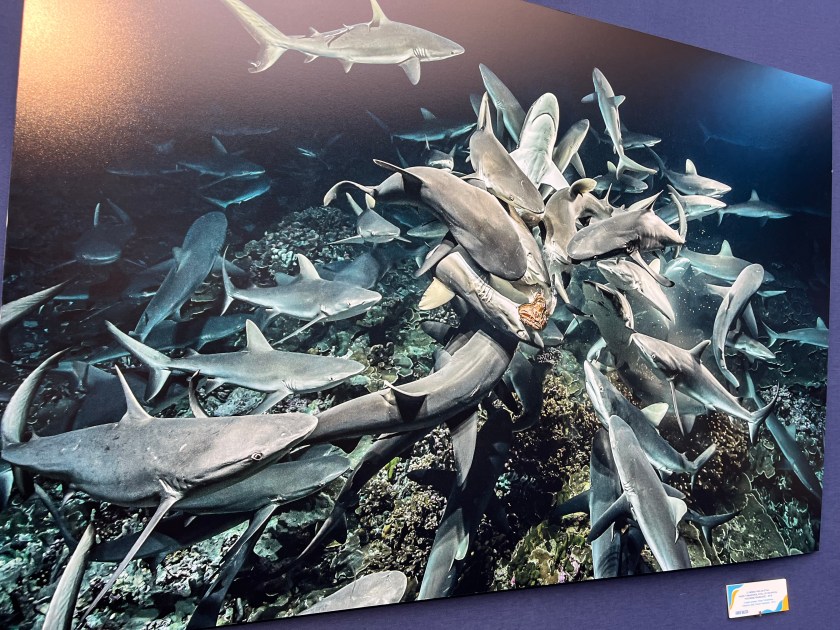
Shark Photo exhibition
Save our Ocean!
For the latest OCEAN/SHARK DOCUMENTARIES: Please viewAugust 2024 post
Conferência das Nações Unidas sobre o Oceano 2025: Resultados e Compromissos
A Terceira Conferência das Nações Unidas sobre o Oceano, mais conhecida como UNOC3, terminou oficialmente em 13 de junho. No entanto, o compromisso de proteger os oceanos e sua biodiversidade, incluindo os tubarões, continua com energia renovada. Isso traz esperança e, acima de tudo, urgência. Gostaria também de aproveitar a oportunidade para agradecer tanto ao Instituto Educacional de Tubarões (SEI) quanto à Fundação Oceano Azul (Portugal) pelo seu generoso apoio. Isso me permitiu participar como delegado de uma organização não governamental (ONG) com uma acreditação especial da ONU. Aqui, pude testemunhar, em primeira mão, tanto os eventos governamentais quanto os eventos públicos mais abertos. Além de uma importante oportunidade educacional, aprendi sobre a importância do diálogo, mas também a necessidade urgente de os governos agirem e protegerem nossos oceanos e sua biodiversidade única e vital AGORA.
A UNOC 3 reuniu mais de 15.000 líderes globais, especialistas em oceanos, formuladores de políticas, partes interessadas da indústria, comunidades indígenas e sociedade civil para promover novas propostas de ação. Os governos também revisaram o progresso em relação ao Objetivo de Desenvolvimento Sustentável 14 (“Vida abaixo da água”) e buscaram galvanizar compromissos globais para restaurar e proteger os ambientes marinhos.
O La Baleine (A Baleia), localizado no expansivo Palais des Expositions, apresentava pavilhões temáticos, exposições, eventos, oficinas e muito mais. Gratuitamente, uniu o público, incluindo escolas, residentes, turistas, com a comunidade oceânica de uma maneira positiva e informativa.
UNOC 3 Conclusões
Todos os objetivos foram alcançados nesta conferência governamental? Infelizmente, não; no entanto, abaixo está uma lista dos resultados mais críticos de nove tópicos amplos importantes que orientam a conferência. Incluindo a Educação e Engajamento Público, que se concentra em construir literacia oceânica e fomentar um senso global de responsabilidade, é crucial para o sucesso a longo prazo.
O Tratado dos Mares Altos, também conhecido como o Acordo sobre a Biodiversidade Além da Jurisdição Nacional (BBNJ), alcançou um marco crítico com 50 ratificações, ainda 10 a menos do que o número necessário para entrar em vigor e criar o primeiro acordo legalmente vinculativo para governar a diversidade marinha em águas internacionais. Este acordo abrange dois terços do oceano que estão além da jurisdição nacional. O acordo pode entrar em vigor em janeiro de 2026, já que 17 países estão supostamente passando pelo processo de ratificação.
Áreas Marinhas Protegidas (AMPs) – Mais de 20 novas áreas protegidas foram anunciadas, incluindo as águas do Pacífico em torno da Polinésia Francesa, uma área que é o dobro do tamanho da França. Estas estão atualmente protegidas sob a meta global de conservar 30% do oceano até 2030, também conhecida como a campanha 30×30.
Acabar com a Poluição Plástica: 96 países endossaram uma abordagem de ciclo completo para reduzir a produção e consumo de plástico. Demonstrando um compromisso político renovado antes da negociação em Genebra no próximo mês, de 5 a 14 de agosto.
Poluição Sonora Marinha: O Panamá e o Canadá lideraram o lançamento da Coalizão de Alta Ambição por um Oceano Silencioso. A primeira coalizão política global dedicada a reduzir a poluição sonora subaquática do transporte impacta severamente baleias, golfinhos, peixes, incluindo tubarões e invertebrados. Esses animais sencientes sofrem de estresse crônico e interrupção comportamental devido à poluição sonora.
Vida Aquatica vs Recursos Marinhos
O progresso nessas áreas foi positivo, mas os esforços de conservação ainda se concentram em como os humanos podem utilizar o oceano para seu máximo benefício. Embora exista um consenso científico de que os animais aquáticos são sencientes e uma crescente preocupação pública por seu bem-estar, eles são frequentemente enquadrados exclusivamente como recursos marinhos a serem geridos, capturados, cultivados ou comercializados, em vez de serem vistos como indivíduos com a capacidade de sofrer ou o direito a tratamento humanitário.
Para isso, eu adicionaria que, assim como as cadeias alimentares terrestres, as cadeias alimentares aquáticas também são equally essenciais e desempenham um papel intrincado na manutenção de um ecossistema marinho equilibrado. Tubarões, por exemplo, são predadores de topo que se alimentam de animais marinhos mortos, doentes ou fracos, os quais são vitais para manter um oceano saudável.
Um destaque adicional da conferência foi o lançamento oficial da Coalizão Global para Haltar a Extinção de Tubarões e Raias Ameaçados. Tubarões e raias são parentes próximos e ambos pertencem à subclasse Elasmobranchii de peixes cartilaginosos. No entanto, mais de 35% estão ameaçados de extinção, principalmente devido à pesca Ilegal, Não Declarada e Não Regulamentada (IUU).
A Ministra Francesa da Transição Ecológica, Sra. Agnès Pannier-Runacher, lançou a Coalizão Global para Haltar a Extinção de Tubarões e Raias Ameaçados, convocando países de todo o mundo a se mobilizarem e apoiarem a iniciativa. Até agora, nove países assinaram a Declaração para se juntar a esta Coalizão, com mais esperando se juntar em breve, assim como numerosas organizações parceiras.
Este evento de sucesso foi organizado pela Comissão de Sobrevivência de Espécies da IUCN, WWF e TRAFFIC, com o apoio de mais de 50 parceiros, incluindo o Instituto Educacional de Tubarões (SEI). Veja webpage dedicada.
Várias apresentações destacaram a necessidade urgente desta Coalizão atrasada. Em um raro momento em que ONGs e Governos se uniram e concordaram com:
Ações de alto nível para proteger habitats e espécies críticos
Regulamentar a pesca e o comércio
Assegurar a cooperação regional e internacional
As três ações específicas propostas para garantir a sobrevivência a longo prazo de tubarões e raias incluem:
Protegendo Habitats Chave e Garantindo Conectividade Ecológica
Garantir o Comércio Sustentável e Legal
Estabelecimento de um Grupo de Trabalho Intergovernamental Global sobre Espécies de Tubarões e Raias
Ação Urgente Necessária
É somente por meio de diálogo e discussões, tanto em níveis de ONGs quanto de governos, assim como aumentando a literacia oceânica, que podemos garantir novos compromissos para proteger o oceano e sua biodiversidade, que inclui todas as espécies de tubarões.
No entanto, o tempo está se esgotando. Com o verão se aproximando aqui no hemisfério norte, em junho/julho já vimos uma excepcional onda de calor marinha tanto no Mediterrâneo quanto na Europa Ocidental, com aumento de temperatura de até 4ºC, e vários raios são visíveis perto da costa ou na praia. Além disso, cidades próximas ao Círculo Ártico estão experimentando temperaturas de 30 °C, o dobro de suas temperaturas normais. É hora de todos nós fazermos nossa parte e protegermos nosso único oceano, pois toda a vida marinha, incluindo os tubarões – os principais predadores marinhos.
Chamada Global à Ação pela Literacia do Oceano
Os governos da França, Austrália, Brasil e Polinésia Francesa fizeram um compromisso concreto para promover a Literacia Oceânica como um facilitador chave da ação oceânica e da sustentabilidade. (Veja Chamada à Ação de Veneza a Nice a Belém)
Os compromissos podem incluir compromissos em diferentes áreas, como educação, pesquisa, política, comunicações, desenvolvimento de capacidades ou engajamento comunitário. Todas as contribuições serão fundamentais para apoiar a implementação do ODS 14 e fortalecer o movimento global de Educação Oceânica.
Esses compromissos ou promessas podem assumir muitas formas—grandes ou pequenas—mas devem ser orientados para a ação, realistas e mensuráveis, para facilitar o acompanhamento do progresso e celebrar os resultados na próxima Conferência da ONU sobre os Oceanos em três anos.
Para ver os mais recentes DOCUMENTÁRIOS SOBRE OCEANOS/TUBARÕES: Por favor, veja o post de agosto de 2024.

 Teachers4Sharks