

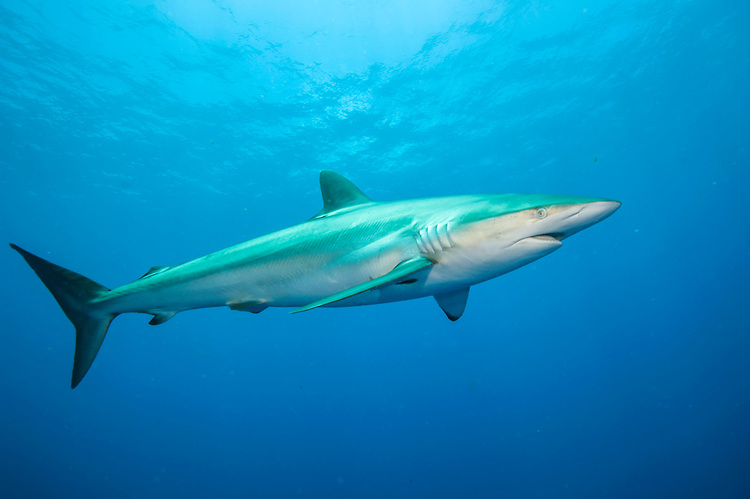
The article Silky shark makes record breaking migration in international waters of the Tropical Eastern Pacific is about the incredible migratory trip of a tagged silky shark named Genie. She traveled more than 27,666 km in over 546 days, the longest recorded silky shark migration according to a very recent study published in the Journal of Fish Biology (May 2024). Silky shark makes record breaking migration in international waters of the Tropical Eastern Pacific (phys.org)
More than 99% of the time Genie was tracked, occurred within the international waters outside Ecuador and the Galapagos Islands. Highlighting the critical need for international cooperation in the protection of these long-distance traveling oceanic sharks.
Silky sharks (Carcharhinus falciformis) have slow growth and are in great danger because of serious overfishing and the fin trade or finning. These sharks swim in the open seas in international water where there is little regulation for controlled fishing. They are also listed on the IUCN Red list of threatened species.
Conclusion: Understanding the migratory paths of silky sharks, and other shark species, is very important. It is urgent to use this information for effective global management between marine conservation and fishing management. Another reason why shark science, international cooperation, and ocean literacy need to go hand in hand and inform teachers and students about the importance of this amazing long-distance traveling shark.
Photo credit: Yuriy – Apnea Pirate
Conservação do Tubarão sedoso: Revelado o Maior Estudo de Migração Registrado
O artigo Tubarão sedoso realiza migração recorde em águas internacionais do Pacífico Oriental Tropical trata da viagem migratória incrível de um tubarão sedoso marcado chamado Genie. Ela viajou mais de 27.666 km em mais de 546 dias, a migração de tubarão sedoso registrada mais longa, de acordo com um estudo muito recente publicado no Journal of Fish Biology (maio de 2024). Tubarão sedoso realiza migração recorde em águas internacionais do Pacífico Oriental Tropical (phys.org)
Mais de 99% do tempo em que Genie foi rastreada ocorreu nas águas internacionais fora do Equador e das Ilhas Galápagos. Destacando a necessidade crítica de cooperação internacional na proteção desses tubarões oceânicos viajantes de longa distância.
Os tubarões sedosos têm crescimento lento e correm grande perigo devido à pesca excessiva e ao comércio ou corte das barbatanas. Esses tubarões nadam em mar aberto, em águas internacionais, onde há pouca regulamentação para a pesca controlada. Eles também estão listados na Lista Vermelha da IUCN de espécies ameaçadas.
Conclusão: Compreender os caminhos migratórios dos tubarões sedosos e de outros espécies de tubarões é muito importante. É urgente utilizar essas informações para uma gestão global eficaz entre a conservação marinha e a gestão da pesca. Outro motivo pelo qual a ciência dos tubarões, a cooperação internacional e a literacia do oceano precisam andar de mãos dadas e informar professores e alunos sobre a importância desse incrível tubarão viajante de longa distância.

 Teachers4Sharks